Internal ballistics

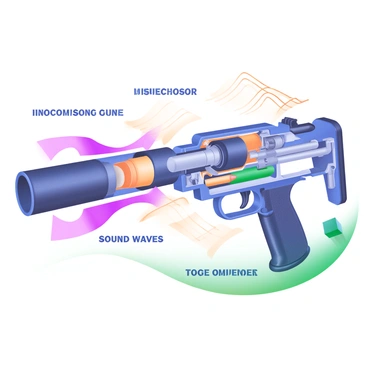
A close-up view of a firearm's muzzle at the moment of ignition. The barrel is metallic and slightly darkened from heat. A vibrant explosion of flames erupts from the muzzle, showing shades of orange, yellow, and hints of blue in the flame wave. Sparks and small particles are visible within the fire, reflecting light as they scatter outward. The background is blurred to emphasize the intense motion and energy of the flame wave, capturing the dynamic nature of the gunpowder ignition.A scientist with glasses is standing in a laboratory, observing an internal ballistics experiment. The scientist is wearing a white lab coat over a light-colored shirt and has a focused expression. In the foreground, there are several pieces of high-tech equipment, including a digital console with glowing buttons and a large monitor displaying data and graphs related to the experiment. To the left, there is a clear glass container holding a small projectile, while a high-speed camera is positioned nearby, aimed at the apparatus. Various tools and measuring instruments are neatly arranged on a stainless steel table, contributing to the high-tech atmosphere of the lab.A historic cannon made of dark, weathered iron is positioned on a grassy field. The cannon is mounted on wooden wheels, which appear aged and splintered. Smoke billows from the barrel, highlighting the combustion process. Bright orange and yellow flames erupt from the cannon's muzzle, illustrating the explosive discharge. Surrounding the cannon, fragments of debris scatter from the force of the blast. The scene captures the moment of firing, emphasizing the internal pressure and dynamics of the explosion.A 3D icon of a bullet in motion, piercing through a speedometer. The bullet is metallic and streamlined, showcasing aerodynamic design. The speedometer features a dial with a needle indicating varying speeds, with marked increments. The background includes blurred lines to illustrate speed, enhancing the dynamic motion. The bullet and speedometer should be the focal points of the image, clearly depicting the relationship between speed and motion.A detailed internal view of a sniper rifle during a shot, showcasing the firing mechanism in action. The bolt is pulled back, exposing the cartridge chamber. The bullet is positioned in the barrel, ready to be propelled forward. The trigger mechanism is visible, demonstrating the precise moment of engagement. Gas is escaping from the muzzle, indicating the explosive discharge. An array of internal components, including the firing pin and spring, are highlighted, capturing the intricate workings of the rifle. The background is subtly blurred to focus on the internal mechanisms.An illustration of a ballistic chamber showcasing the changes in pressure during firing. The chamber is cylindrical in shape, with clear sections labeled to indicate different stages of firing. Arrows indicate the direction of pressure changes. There are gauges displayed on the side showing pressure readings at various points. The interior walls of the chamber are highlighted to reflect the rapid expansion of gases. Visual cues such as sound waves and heat distortion are present to represent the intense conditions inside the chamber. A clear visualization of how the pressure fluctuates throughout the firing process is depicted.A cross-section view of a firearm barrel showcasing rifling grooves. The grooves spiral inward along the length of the barrel. A bullet is positioned inside the barrel, illustrating how it engages with the rifling. The bullet has visible spin lines indicating its rotation as it travels through the rifled section. The background is minimal to emphasize the barrel and bullet interaction.An internal view of an old musket is depicted, showcasing the detailed mechanics of the weapon. The barrel is visible, revealing the chamber where the gunpowder is held. Flames and smoke are illustrated as they burst from the ignited powder, demonstrating the detonation process. A bullet is shown being propelled forward through the barrel, highlighting the path of the projectile. The wooden stock of the musket is intricately detailed, with visible grain patterns and metal parts integrated into the design. The trigger mechanism is also present, showing the interaction between components during firing.A detailed illustration of the internal mechanics of a tank cannon as it fires a shell. The cannon is positioned horizontally, with a section cut away to reveal its interior components. The breech is open, showing a large shell being loaded into the chamber. Flames and smoke are visible at the rear of the cannon, indicating the discharge of the shell. Inside the cannon, various parts such as the rifling, firing pin, and propellant charge are prominently displayed. The shell is depicted in motion, traveling through the barrel as it exits towards the viewer.A close-up illustration of gunpowder igniting and expanding inside a cartridge. The cartridge is metallic, with intricate details visible on its surface. Inside, the gunpowder is shown in a vibrant state of ignition, with small sparks and flashes of light radiating outward. The expansion creates a visible wave effect, distorting the surrounding materials. The overall focus is on the dynamic transformation of the gunpowder, highlighting its explosive energy within the confines of the cartridge.An inside look at the firing mechanism of a flintlock pistol. The image shows the internal structure of the pistol, focusing on the hammer and the frizzen. The hammer is in a cocked position, ready to strike. Sparks are depicted as the hammer descends onto the frizzen, igniting the priming powder in the pan. The pan is open, revealing a small amount of powder. The touch hole is visible, leading to the barrel where the ignition would transfer to the main charge. The overall mechanism is intricately detailed, showcasing all functional components.A close-up view of the internal mechanics of a machine gun in action. The image captures the intricate gears and springs moving in perfect synchronization while bullets are being fired. There are visible metal components, including the barrel, bolt, and feeding mechanism, all depicted in sharp detail. Surrounding the machine gun are spent cartridges scattered across a surface, reflecting the intensity of its operation. The background features subtle hints of machinery, enhancing the industrial atmosphere of the scene.A close-up view of the rifling inside a rifle barrel. The interior of the barrel features a series of spiraled grooves cut into the metal, creating a helical pattern. Each groove is well-defined and contrasts with the smooth surface of the barrel. The bullet, depicted as it travels through the barrel, shows visible spin due to the rifling. The bullet has distinct markings along its casing, indicating the type of ammunition. The scene conveys the mechanical precision of the rifling and its role in stabilizing the bullet's trajectory.A cross-sectional view of a gun barrel displaying the internal structure. The bullet is shown in position, highlighting its path through the barrel. Gas pressure build-up is represented with arrows indicating movement and expansion. The interior of the barrel features rifling grooves, providing detail to the design. The bullet is metallic, with a pointed tip, while the barrel is metallic and cylindrical.An internal view of a submachine gun showcasing the detailed mechanics during rapid firing. The image displays the intricate arrangement of the bolt carrier group, with the bolt in motion as it cycles back and forth. You can see the ejection port open, with spent cartridge casings being expelled from the chamber. The magazine is partially visible, revealing the bullets being fed into the chamber. The action is captured mid-cycle, emphasizing the blur of movement to convey the speed of firing. The internal components, such as the recoil spring and firing pin, are clearly defined, highlighting the complexities of the firearm's operation.A detailed internal schematic of a rocket launcher is displayed, showcasing various components involved in the firing process. In the center, there is a clear depiction of the rocket's launching tube. Surrounding it are labeled diagrams illustrating the gas dynamics, including arrows indicating the flow of exhaust gases. Components such as fuel tanks, ignition systems, and guidance mechanisms are represented with intricate details. Each part is color-coded for easy identification, and numerical annotations provide specific measurements. The overall layout emphasizes a technical and educational approach to understanding rocket launcher mechanics.A metallic bullet casing with a shiny surface ejects from the side of a firearm. The casing is cylindrical with a slightly tapered bottom where it was attached to the bullet. It is captured in mid-air as it is propelled away from the gun. The firearm, a sleek, modern handgun, has an ergonomic grip and a black matte finish. There is a slight blur effect around the casing to indicate rapid motion. The background is minimal, focusing on the action of the ejection.A scientific diagram illustrating the internal trajectory of a bullet within a barrel. The barrel is depicted in a cross-section view, showing the rifling grooves inside. The bullet is shown in mid-flight along its trajectory, with motion lines indicating speed. Key labels highlight important features such as "bullet," "rifling," and "firearm chamber." The background features grid lines for precision, enhancing the technical nature of the illustration.An exploded view illustration of a bullet cartridge displaying its internal components. The image includes the bullet at the top, with a clearly defined projectile. Below, the casing surrounds the primer, which is positioned at the base. The powder charge is visible within the casing, showcasing the different layers and textures of the materials. Each component is labeled for clarity, with arrows pointing to their respective positions. The overall layout allows for a detailed examination of how the parts fit together in the cartridge.A 3D icon of a pistol being fired. The sequence shows the pistol in different stages of firing. The first stage shows the pistol in a ready position. The second stage depicts the trigger being pulled, with the trigger mechanism visibly engaged. The third stage illustrates the firing pin striking the primer, causing a small explosion represented in bright orange and yellow colors. The fourth stage shows the bullet being propelled out of the barrel, with motion lines indicating speed. The final stage displays the bullet in flight, with visible ballistic changes such as the expanding gases around the bullet. The icon is detailed, highlighting the components involved in the firing process.A detailed cross-sectional view of a revolver's chamber showcasing the internal mechanics. The chamber contains multiple cylindrical openings designed to hold cartridges. Each cartridge is visible, showing the bullet at the top and the primer at the base. One of the cartridges is ignited, with a small flame visible at the primer, illustrating the ignition process. The revolver's cylinder is depicted in a rotated position, highlighting the rotation mechanism that aligns each chamber with the firing pin. The overall design is precise, emphasizing the functionality of the components involved in firing a round.A detailed illustration showing the chemical reactions occurring in gunpowder during a shot. The visual displays a cross-section of gunpowder grains, highlighting the three main components: potassium nitrate, charcoal, and sulfur. Arrows connect these components to indicate their interactions during combustion. An animated sequence of reactions shows the breakdown of potassium nitrate releasing oxygen, the combustion of charcoal producing carbon dioxide, and the role of sulfur in lowering the ignition temperature. The background illustrates the rapid expansion of gases that results from these reactions, creating a visually dynamic representation of the explosive process.An illustration showcasing the internal dynamics of a silenced gun. The image features a detailed cross-section of the gun, highlighting its internal components such as the barrel, suppressor, and firing mechanism. The suppressor is prominently displayed with arrows indicating the path of escaping gases. Surrounding the gun are visual representations of sound waves depicted as wavy lines being absorbed, showcasing the concept of sound suppression. Each part is labeled clearly with technical terms, allowing for easy understanding of the mechanics involved.A cutaway illustration of a futuristic firearm is presented. The exterior of the weapon features sleek contours and a textured grip. Inside, various components are visible, including a complex firing mechanism, a power cell, and integrated electronics. The barrel showcases a series of cooling fins, and there are multiple chambers for ammunition. A section of the weapon reveals advanced targeting systems and microprocessors, highlighted in a way that emphasizes their intricate design. Each part is labeled for clarity, demonstrating the hypothetical internal processes of operation.An educational chart displaying the phases of internal ballistics involved in firing a bullet. The chart features a series of labeled diagrams, each depicting a different phase: ignition of the propellant, buildup of pressure, bullet acceleration down the barrel, and exit from the muzzle. Each diagram is color-coded for clarity and includes arrows showing the direction of movement. Surrounding these diagrams are annotations with brief explanations and key terms highlighted in attractive fonts. The overall layout is clean and organized, ensuring easy comprehension of the internal ballistics process.A detailed depiction of a bullet exiting the barrel of a gun. The bullet is shown in motion, with a sleek metallic finish and aerodynamic shape. A shockwave is visibly forming around the bullet, creating a distortion in the air, represented by rippling waves radiating outward. The background features the gun, with its polished surface and precisely defined mechanisms, alongside the bullet's trajectory path marked by a faint line. The scene captures a moment of dynamic energy and motion.
В сообществе ничего не найдено