Double slit experiment

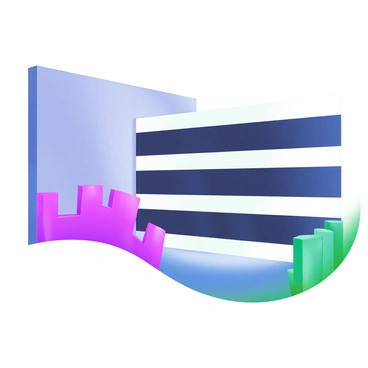
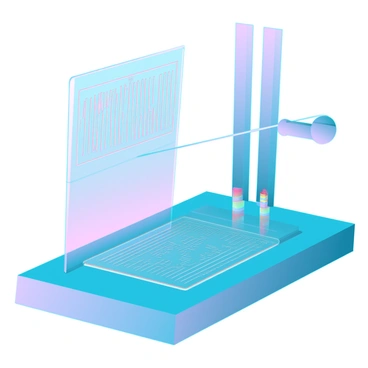
A double-slit experimental setup is depicted, featuring two closely positioned vertical slits. Light trails are vividly illustrated, showing the path of photons as they pass through the slits. The trails create wave-like patterns that spread out, illuminating the area with bright colors, capturing the concept of light's dual wave-particle nature. The background includes a dark surface to enhance the visibility of the light trails and the slits, while the photons are represented as small, luminous particles emanating from a coherent light source.A detailed scientific diagram depicting the double-slit experiment setup. The diagram features a light source on the left emitting beams of light towards two parallel slits in a barrier. Each slit appears as a thin vertical opening in the barrier. Behind the barrier, a screen displays an interference pattern of alternating bright and dark fringes. Label the light source with the phrase "Light Source," the barrier with the phrase "Barrier with Slits," and the screen with the phrase "Interference Pattern." Arrows indicate the direction of the light beams passing through the slits. The overall layout is clear and informative, emphasizing the relationship between the components and the resulting interference pattern.A wall displaying a double-slit interference pattern. The wall is divided into alternating bright and dark bands, creating a striking visual contrast. The bright bands are vivid white, while the dark bands are deep black, emphasizing the patterned effect. The arrangement of the bands is uniform, stretching horizontally across the wall, drawing the viewer's attention to the optical phenomenon.A classic double-slit experiment setup featuring a light source emitting a beam of monochromatic light directed towards two closely spaced vertical slits. Behind the slits, there is a photographic plate capturing the interference pattern formed by the light waves. The apparatus has a simple, straightforward design with a basic light source, slits, and a detection screen. 

In contrast, a modern double-slit experiment setup showcasing a laser light source with a holographic display emitting a coherent beam. The slits are now made from advanced materials, appearing more refined and precise, with a digital interface for controlling the experimental parameters. The detection screen is a high-resolution digital sensor displaying real-time interference patterns in vibrant colors, including a graphical representation of wave functions accompanying the physical setup.A modern pastel illustration depicting a timeline of the double-slit experiment's development. The timeline is represented as a long, horizontal line with evenly spaced markers. Each marker contains a small icon and a date. Key milestones include the year "1801" with an icon of a wave, representing Thomas Young's original experiment. The next marker shows "1927", accompanied by an atom symbol, signifying the introduction of quantum mechanics. Another marker indicates "2001", featuring a modern laser icon, representing advancements in technology. Colorful arrows connect the markers, enhancing the flow of the timeline, while dotted lines lead to illustrated examples of light and matter passing through two slits.A modern pastel illustration depicting a single photon represented as a glowing particle, traveling through a double-slit apparatus. The slits are shown as two narrow openings in a barrier, with the light source positioned behind them. As the photon passes through the slits, it creates a wave-like pattern visible on a screen positioned in front of the barrier. Surrounding the setup are visual elements such as arrows indicating the photon's path and subtle waves emanating from the slits, adding a sense of motion. The background is softly colored in pastel shades, enhancing the focus on the photon and the slits.An old laboratory setting featuring wooden benches and dusty shelves lined with historical scientific equipment. In the center, a large apparatus is constructed for the double-slit experiment. The apparatus includes a light source emitting a beam towards two narrow slits cut into a dark barrier. Behind the barrier, a screen displays a pattern of alternating light and dark bands resulting from the experiment. Various vintage tools such as glass beakers, brass instruments, and aging notebooks are scattered around, adding to the historical ambiance. Dim, warm lighting illuminates the scene, casting soft shadows across the workspace.A modern pastel illustration of a landscape formed by "light waves" and "interference patterns" inspired by the "double-slit experiment." The ground is made up of flowing waves in soft gradients of blue and pink, creating a serene terrain. In the background, there are peaks that resemble the peaks and troughs of wave patterns, all softly blending into one another. Above the landscape, intricate patterns of varying colors radiate outward, mimicking the interference fringes, with soft arcs and circles overlapping seamlessly across the sky. Bright bursts of light emerge at various points, adding depth and interest to the overall scene.A butterfly with wings made entirely of light, exhibiting vibrant quantum interference patterns. The wings shimmer in various colors, reflecting waves of light that create intricate designs. Each wing displays unique patterns that blend harmoniously, radiating a sense of dynamic movement. The body of the butterfly is slightly darker, providing contrast to the luminous wings. The background is a subtle gradient that enhances the glow of the butterfly's wings.A series of vibrant, overlapping patterns form in intricate shapes reminiscent of waves. The colors include a mix of deep blues, bright oranges, and soft purples, creating a stunning visual effect. Circular and linear waveforms intersect at various angles, producing a dynamic sense of movement throughout the composition. Light emanates from the center, casting reflections and enhancing the contrast between the bright and dark areas. Each section of the design has a unique texture, adding depth and complexity to the overall image.A futuristic illustration of light waves, depicted as vibrant beams in varying colors, moving towards two parallel slits. The waves pass through the slits and intersect, creating intricate interference patterns of bright and dark areas. The background features a digital grid that enhances the sense of movement. The patterns formed by the light waves expand outward in a visually captivating manner, demonstrating the principles of wave interference in a striking and engaging way.A series of cloud-like shapes representing probability distributions are displayed on a white background. Each cloud is softly blended, with varying shades of blue and purple, indicating different probabilities. The clouds flow in a wave-like pattern across the image, with some areas denser than others, illustrating the interference patterns created in a double-slit experiment. There are faint outlines of two vertical slits in the middle of the composition, with the clouds emanating from them, emphasizing the origin of the distributions.A theatrical stage setup is present, featuring a large, dark backdrop. In the center, a rectangular double-slit apparatus is placed on a table. Two narrow vertical slits are cut into a black screen. Above the apparatus, beams of light are projected from a series of overhead lights, creating distinct light patterns as they pass through the slits. The resulting interference pattern is displayed clearly on a white screen positioned further back on the stage. The atmosphere suggests an academic presentation, with various instruments and equipment strategically placed around the stage to support the experiment.A futuristic laboratory filled with advanced technology and sleek, metallic surfaces. In the center, a high-tech version of the double-slit experiment is displayed, featuring a sophisticated light source emitting beams of light towards two precise slits. A series of holographic screens surround the setup, showing real-time data and visualizations of wave patterns. Scientists in lab coats, equipped with augmented reality glasses, are observing and analyzing the results. The ambience is illuminated by a soft, blue glow from the screens, and various scientific instruments and apparatus are neatly arranged on the workbenches.A beam of light entering a setup with two closely spaced slits. The light passes through the slits and begins to split into multiple distinct paths. Each path radiates outward, creating a series of light bands or fringes in a pattern. The colors of the light vary, with some paths showing a vivid spectrum while others appear more uniform. The background is a simple gradient to emphasize the light patterns.A scientist with medium skin and short black hair is standing in a modern laboratory, surrounded by various scientific equipment. The scientist is focused on a large screen displaying the wave-pattern results of the double-slit experiment, showing interference patterns in vibrant colors. Several particle detectors are arranged on a table nearby, alongside a stack of notebooks filled with handwritten notes. A few glass vials containing different materials are also visible on the table. The lab is brightly lit and has shelves lined with books on physics and quantum mechanics. The scientist is wearing a white lab coat and safety goggles as they examine the data with intense curiosity.A computer screen displays a detailed digital simulation of the double-slit experiment. The screen shows two narrow vertical slits with a wave pattern emerging from them. Bright and dark fringes of light are observed on the screen, illustrating the interference pattern created by the waves. Various scientific notations and analytical graphs surround the simulation, indicating measurements and results. The computer itself sits on a desk cluttered with textbooks and lab equipment, creating a scholarly atmosphere.An illustration depicting the double-slit experiment, showcasing two parallel slits with a light source illuminating them. A beam of light is directed towards the slits, creating an interference pattern on a screen positioned behind the slits. In the foreground, a figure is observing the experiment with an expression of curiosity. A measuring device is placed near one of the slits, indicating the act of observation. The particles are represented as small dots traveling through the slits, with arrows illustrating their paths and interactions, emphasizing the difference in outcomes when particles are observed versus unobserved. The scene is vibrant, capturing the essence of scientific exploration and inquiry.A modern laboratory setting features a scientist focused on adjusting controls for a "double-slit experiment." The scientist is wearing a white lab coat and safety goggles. In front of them is a complex apparatus with two narrow slits. Various scientific instruments, including a laser and electronic displays, are arranged on the table. The background showcases shelves filled with books and lab equipment, illuminated by bright, overhead lights. The overall scene emphasizes precision and experimentation.A 3D icon representing the double-slit experiment as a puzzle piece of quantum mechanics. The icon features two slits cut into a flat surface, with light waves emanating from them, creating an interference pattern. A small particle, such as a photon or an electron, is depicted traveling towards the slits with a trailing wave-like effect. The puzzle piece is interconnected with other pieces symbolizing different aspects of quantum mechanics, such as entanglement and superposition. All elements are rendered in a sleek, modern style, emphasizing the complexity and intrigue of quantum phenomena.A split illustration depicting "wave" characteristics of light on one side, featuring smooth, flowing sine waves in shades of blue and white. On the opposite side, "particle" characteristics of light are represented by discrete, glowing orbs that simulate photons, in vibrant colors like yellow and red. The two halves are clearly defined, showcasing the contrast between the continuous wave patterns and the distinct particles, with a subtle blending in the middle to signify their dual nature.Vibrant colored waves in various shades of blue, red, and green passing through two narrow slits. The waves are shown bending and spreading out after passing the slits, creating an interference pattern. The overlapping regions of the waves form bright and dark bands, highlighting the areas of constructive and destructive interference. The background is a clean, uniform surface that enhances the visual contrast of the colored waves.A wavefront composed of numerous concentric circles is approaching a barrier with two closely spaced vertical slits. The wavefront exhibits distinct wave patterns that become altered as they encounter the slits. Behind the barrier, a series of alternating bright and dark bands of interference are visible, demonstrating the wave interference phenomenon. The overall scene captures the dynamic interaction of waves with the barrier and the resulting pattern on the surface behind it.A classroom setting with rows of desks and a chalkboard in the background. A student stands at the front, holding a colorful poster titled "Double-Slit Experiment." The poster displays diagrams of light waves passing through two slits, creating an interference pattern. The student is wearing glasses and appears engaged, discussing the experiment. Classmates are seated at their desks, some taking notes, while others look attentively at the presentation. Sunlight streams through a window, illuminating the scene.A clean laboratory setup featuring the double-slit experiment. In the center, there is a laser with a bright, focused beam directed towards a barrier. The barrier has two narrow, parallel slits cut into it, allowing the laser beam to pass through. Beyond the barrier, a screen is positioned to capture the pattern created by the light passing through the slits. The environment is well-lit, with scientific equipment neatly arranged on a table nearby, and a ruler and measuring tools are visible, emphasizing the experimental nature of the scene.A group of three children, two boys and a girl, are playfully reenacting the double-slit experiment in a bright, cheerful room. The girl, with curly hair, stands at the center holding a cardboard cutout with two slits made in it. The boy on her left, wearing glasses, is using a small flashlight to shine light towards the slits, creating a pattern on the wall behind them. The other boy, with short hair, is holding up a piece of white paper to catch the light. There are various materials scattered around them, including a ruler, a small prism, and some colored markers. The walls of the room are painted in playful colors, reflecting their enthusiasm for their science experiment.An arrangement of particles is shown in a space, each particle represented as a small sphere. Some particles are depicted in a state of vibration, while others appear in various overlapping positions. The spheres have different sizes, indicating their varying states of existence. A few particles are clustered together, suggesting interaction, while others are isolated. The background is filled with faint lines indicating wave-like patterns, giving a sense of motion and fluctuation in the space surrounding the particles.An illustration is divided into two sections. On the left side, there are multiple small circles representing light particles traveling in straight lines. Some of these particles are colliding with an object, demonstrating their impact. On the right side, there are smooth, flowing lines that represent light waves. These waves are depicted in a rhythmic pattern, with crests and troughs clearly visible. The two sections are separated by a central vertical line, reinforcing the contrast between particles and waves.
В сообществе ничего не найдено