Gutenberg press

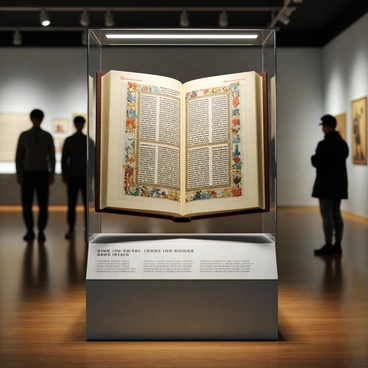
A dimly lit workshop with wooden beams and a concrete floor. In the center, there is an old wooden table covered with scattered sheets of paper and printing tools. A vintage lamp with a warm glow casts light specifically on the printing area, highlighting the intricate details of a printmaking project. Shadows stretch across the walls, creating a cozy yet industrious atmosphere. Various printing materials and tools are organized around the workspace, including rollers, ink pots, and blocks of linoleum.A library shelf filled with early printed books and manuscripts. The shelf is made of dark wood, showcasing intricate carvings along its edges. On the left, there is a large, leather-bound book with a gold-embossed title on the spine. Next to it, a smaller manuscript is open, displaying delicate handwriting on parchment. Various other books of different sizes are stacked, some standing upright while others lie flat. One book has a bookmark peeking out, indicating it is in use. The shelf is lined with ornate bookends, and the background is subtly blurred to emphasize the detail and craftsmanship of the books.A historical scene depicting Johannes Gutenberg at his wooden desk, immersed in his work. He is an older man with graying hair and a focused expression, dressed in a dark, tunic-like garment. In front of him lies a large piece of parchment, covered with intricate sketches and notes detailing his innovative plans for the printing press. Tools of the trade, such as ink pots, quills, and metal type pieces, are scattered around the desk. A flickering candle casts a warm glow, illuminating the workspace as Gutenberg carefully draws, surrounded by books and manuscripts that reflect the knowledge of his time.A red 15th-century printshop filled with activity and energy. Workers are stationed at various tasks throughout the shop. One worker is operating a large wooden printing press, carefully aligning paper beneath the inked type. Another worker is mixing different colored inks on a wooden table, with jars of inks scattered around. Nearby, a third worker is stacking freshly printed sheets, the air filled with the smell of paper and ink. The room is adorned with shelves lined with wooden type, and tools of the printing trade are scattered across the tables. Light streams in through a small window, illuminating the dedicated faces of the workers.An interior view of Gutenberg's workshop, featuring a large wooden printing press in operation, with visible ink rollers and paper sheets stacked nearby. There are shelves filled with carved wooden type blocks arranged meticulously. The room is cluttered with parchment and old manuscripts scattered around, and tools of the trade such as wooden hand tools and ink pots are present. The walls are adorned with scrolls and diagrams related to printing techniques. Sunlight streams through a small window, casting shadows on the dusty wooden floor.A worker is standing at a large workbench, mixing pigments in various containers to create vibrant printing inks. The worker, wearing a protective apron and gloves, is focused intently on the task. Several small jars filled with different colored powders are spread across the surface. A sturdy stirring stick is in the worker's right hand, blending the vibrant mixtures in a glass bowl. To the left, there is a digital scale displaying the weight of the pigments. In the background, shelves are filled with labeled containers of ready-to-use inks, organized by color. A window above the workbench allows natural light to illuminate the workspace.A portrait of "Johannes Gutenberg" is centered in the image, showcasing his prominent features and historical attire. He has a thoughtful expression, deep-set eyes, and a furrowed brow. Surrounding him are stacks of "books" and "printed sheets," depicting the era's literature and printing technology. The arrangement of the books varies in size and opens, revealing pages filled with text. The printed sheets flutter slightly, as if caught in a gentle breeze, adding a sense of movement to the scene. The overall composition conveys the significance of Gutenberg's contributions to printing and literature.The Gutenberg Bible is opened to a page showcasing intricate, colorful illustrations and ornate lettering. The book is displayed on a glass pedestal with a subtle spotlight highlighting its details. Surrounding the pedestal, sleek modern exhibit signage provides context, with a clean, minimalist design. The walls of the museum are lined with soft gray panels, and the floor is polished wood, creating a contemporary atmosphere. Visitors can be seen in the background, admiring the historic text through the glass barrier that protects it.A group of artisans is working together in a well-lit workshop. One artisan is pouring a mixture of pulp into a mold, while another is using a wooden frame to create sheets of paper. A third artisan can be seen pressing the sheets to remove excess water, and nearby, stacks of freshly made paper are drying on a long wooden table. The workshop is filled with various tools and equipment used for the paper-making process, including large vats and molds. The artisans are focused on their tasks, showcasing a collaborative and traditional approach to handcrafting paper for printing.A wooden workbench with a dark brown finish. The surface is cluttered with various tools including a hammer, a pair of pliers, and a screwdriver, all arranged haphazardly. Several type pieces in different sizes and shapes are scattered across the bench. In the center, there is a half-printed page with black text visible, slightly curled at the edges. The background is simple and unobtrusive, allowing the workbench and its contents to be the focal point.A red horse is pulling a wooden cart loaded with a large, vintage printing press. The cart has sturdy wooden wheels and a weathered appearance. The printing press is intricately designed, with metal components shining in the light. The horse is walking along a dirt path surrounded by a green landscape, with a few trees in the background. Sunlight casts gentle shadows from the cart onto the ground, emphasizing the textures of the wood and metal. A blue sky overhead completes the scene.A medieval scribe with light brown hair and a neatly trimmed beard, dressed in a deep blue robe with intricate gold embroidery, stands attentively beside a wooden printing press. He holds a feather quill in one hand and has a scroll of parchment tucked under his arm. The printing press is made of dark wood, featuring large gears and a lever mechanism. The room is dimly lit, with beams of light filtering through small windows, illuminating scattered sheets of printed paper on a nearby table. An ink pot sits beside the scribe, with ink stains visible on the table's surface. The atmosphere conveys a sense of focus and innovation as the scribe observes the intricate process.A craftsman with short brown hair and a focused expression, wearing a leather apron over a simple shirt and trousers. He stands in a well-lit workshop surrounded by shelves filled with various tools and materials. In front of him, a typecasting mold is placed on a wooden workbench, with molten metal being poured carefully into the mold. The workspace is cluttered with small metal type pieces and tools used for engraving. The craftsman's hands are gloved, and he is using a pair of tongs to handle the hot metal. The scene captures the intensity and precision of the typecasting process.A medieval market stall is set up with a wooden frame covered in colorful fabric. On the stall, there are several stacks of freshly printed books displayed. The books have leather covers, some embossed with intricate designs. A quill and an inkpot are placed on the side, indicating the process of printing. Behind the stall, a banner hangs that reads "Freshly Printed Books" in elegant typography. Nearby, a few customers are browsing the books, with expressions of interest on their faces. A wooden crate holds additional books ready for sale.A duotone tree with a twisted trunk and sprawling branches reaches high into the sky. The leaves are a vibrant shade of {color_1} and are dense, providing a lush canopy. Hanging from the branches, there are numerous fruits shaped like letters of the alphabet, each fruit varying in size and featuring a contrasting shade of {color_2}. The fruits are vividly detailed, showcasing curves and edges that clearly define each letter form. The ground beneath the tree is covered with soft green grass, dotted with a few fallen letter-shaped fruits, creating a playful atmosphere.A bustling town square filled with people celebrating. In the center, a large stack of books is prominently displayed, with a banner above it stating "Our First Book!" in clear lettering. Around the stack, townsfolk are gathered, some clapping their hands, others holding copies of the book. Children are seen running and laughing, while a group of older individuals are engaged in lively conversation. Balloons can be seen floating above, adding to the festive atmosphere. A backdrop of charming buildings surrounds the square, with flowers decorating the edges.An artisan with light skin and short brown hair is focused on carving a woodcut illustration for a book. He is seated at a workbench filled with various tools, including chisels and a small carving knife. The artisan is wearing a white shirt with rolled-up sleeves and brown overalls. The wood block in front of him has intricate designs partially carved into it. There are scattered wood shavings on the table, and a few opened books with illustrations can be seen in the background. The artisan's expression shows concentration as he carefully works on the details of the woodcut.A historical scene depicting Johannes Gutenberg, a man with a thoughtful expression and medium-length dark hair, dressed in a classic 15th-century robe. He is seated at a sturdy wooden table covered with parchment and ink tools. In front of him lies a freshly printed page, its surface slightly glossy, showcasing clear black text. Gutenberg holds a quill pen in one hand, poised above the completed printed page, ready to sign it with his signature. The background features shelves filled with stacked books and printing equipment, highlighting the significance of his invention.A detailed blueprint drawing of the Gutenberg printing press is displayed on a sheet of parchment. The drawing features the press's frame, showcasing its wooden structure and intricate mechanisms. The design includes labeled parts such as the platen, chase, and ink roller, with precise measurements indicated in a corner. Surrounding the main components, there are additional annotations providing descriptions of the function of each part. The overall layout is organized, with straight lines and careful alignment, creating a technical yet visually engaging representation of this historical invention.A large printing press is actively printing a page. The press has several ink rollers positioned above the paper feed, with ink visible on their surfaces. The freshly printed paper is moving along a conveyor belt, with the last printed page spilling out of the machine. The scene captures the mechanical components of the press, highlighting the intricate gears and levers that function during the printing process. The focus is on the interaction between the ink rollers and the paper, as ink is transferred onto the surface to create text and images.A printer wearing an ink-stained apron is standing beside a large printing press. The printer has a focused expression while adjusting a lever on the press. The apron is heavily marked with various ink splatters, showcasing signs of active work. The printing press is a large, industrial machine with visible gears and rollers. Papers are stacked on the side, ready to be processed. The workspace is filled with various printing materials, contributing to the busy atmosphere of the printing environment.An artisan is carefully binding a book using traditional methods that have been passed down through generations. The artisan is seated at a wooden workbench cluttered with various tools such as needles, threads, and pieces of leather. Their hands are skillfully manipulating the cover and pages, aligning them with precision. On the table, there is a partially completed book, showcasing its textured cover and intricate stitching along the spine. Soft light filters through a nearby window, illuminating the scene and highlighting the craft of bookbinding. The artisan's focused expression conveys their dedication to preserving this ancient craft.A collection of early printed book illustrations displayed in a wooden frame. The illustrations include vibrant scenes featuring human figures, animals, and intricate floral patterns. Each illustration showcases rich details, with some depicting historical events and others illustrating fables. The background of the display is a soft cream color, allowing the colors of the illustrations to stand out. Two of the prominent illustrations are framed in teal while others are bordered with red. Various sizes and shapes of the illustrations create a visually interesting arrangement.A table made of dark wood, with a smooth surface. The table is covered with various metal type blocks, each featuring different letters and symbols. There are several glass ink pots scattered across the table, filled with vibrant black ink. A few ink brushes lie beside the pots, ready for use. The arrangement of the type blocks is scattered, creating an artistic disarray.Close-up of a detailed printing press plate with a shiny surface being coated with vibrant colored ink. The ink is flowing smoothly from a roller onto the plate, creating a glossy finish. The surrounding area includes tools and equipment typical in a printing workshop, such as scattered ink containers and brushes. The texture of the plate is visible, showing intricate patterns that will be transferred onto paper.A young apprentice with light skin and short brown hair is standing in front of an old-fashioned printing press. He is wearing a white shirt with rolled-up sleeves and brown overalls. The apprentice has a focused expression on his face as he carefully adjusts the press's settings. The workshop is filled with scattered sheets of printed paper and tools. The walls are lined with wooden shelves holding various printing materials. Bright sunlight streams in through a nearby window, illuminating the scene.A group of craftsmen working diligently to assemble parts of a printing press. The scene includes three men with varying skin tones, one with light skin and brown hair, another with medium skin and black hair, and the third with dark skin and curly hair. They are using various tools, such as wrenches and screwdrivers, to fit together large metal components. Bits of paper and printed materials are scattered around the workspace. The craftsmen are focused on their task, showcasing teamwork and concentration. They wear work aprons over their casual clothing, highlighting their hands-on approach to the project.A close-up view of an ancient printed Bible page being carefully inspected. The page features intricate lettering and ornate embellishments in rich, dark ink on aged parchment. The hand of an individual with lightly tanned skin is gently holding the edge of the page, with a magnifying glass hovering above the text. Soft light highlights the details of the typography and the texture of the paper, revealing a sense of reverence and careful study in the atmosphere.A group of excited customers gathered in a bright, modern bookstore. They are holding freshly printed books with vibrant covers, showcasing various genres. The customers include a young woman with curly hair, wearing a denim jacket, and a middle-aged man with glasses, dressed in a casual sweater. Nearby, an older woman with silver hair is smiling as she examines a colorful children's book. The scene captures their expressions of joy and enthusiasm as they flip through the pages, surrounded by neatly arranged shelves filled with more books. A sign in the background reads "New Arrivals."A detailed map illustrating the spread of printed books across Europe, featuring various regions marked with symbols representing printing presses. Each symbol is accompanied by small labels indicating the number of printed works. The map includes lines or arrows connecting key cities to highlight the movement and distribution of printed literature. Additionally, ornate borders frame the map, and decorative elements such as quills and ink pots are placed around the edges.
В сообществе ничего не найдено