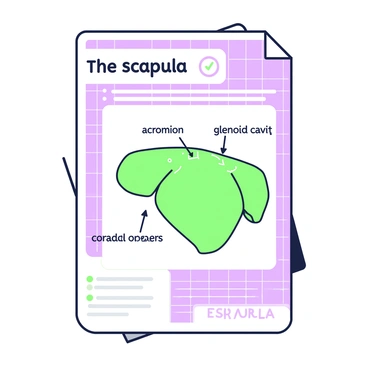
Label scapula following

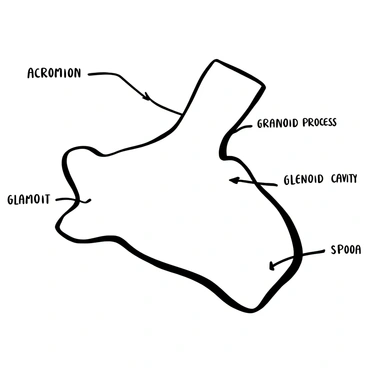
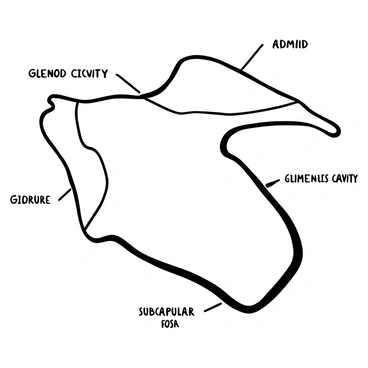
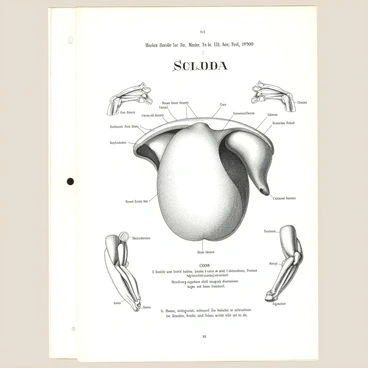
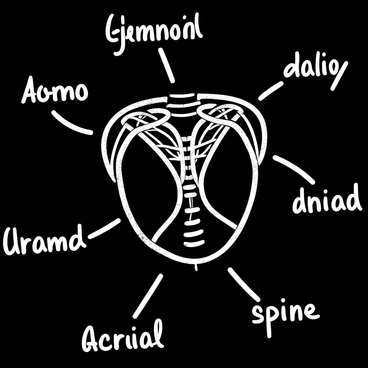
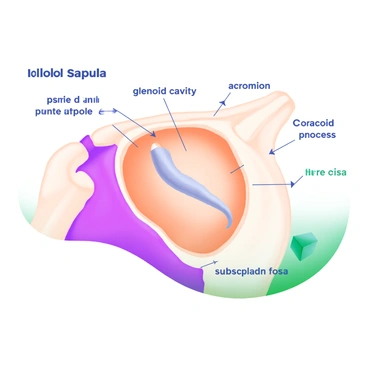
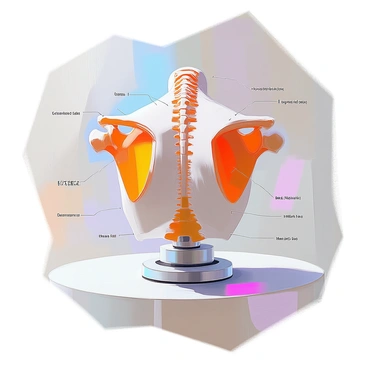
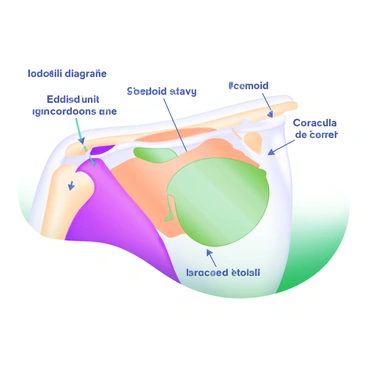
A modern pastel illustration depicting a detailed scapula in the center of the composition. The scapula is intricately designed, showcasing its bone structure with soft gradients of white and light gray. Surrounding the scapula are several abstract labels, each in unique pastel colors such as lavender, mint green, and soft peach. These labels are positioned at varying angles, some connecting to the scapula with thin dotted lines, while others are freely floating around it. The background features a subtle wash of gentle pastel shades to enhance the overall visual richness of the artwork.A transparent illustration of a human scapula, clearly showing its anatomical structure. The scapula is depicted in a realistic style, with visible details such as the spine of the scapula, the acromion, and the glenoid cavity. Each part of the scapula is labeled with distinct colors, making it easy to differentiate between elements. The labels include "Spine," "Acromion," "Glenoid Cavity," and "Coracoid Process," each presented in a clear, legible font. The background is minimalistic to emphasize the scapula's details and color-coded labels.A black-and-white illustration of a human scapula depicted in a minimalist style. The scapula is outlined clearly, showcasing its distinct shape. Labels are positioned beside each section of the scapula, indicating anatomical terms such as "Acromion," "Coracoid Process," "Glenoid Cavity," and "Spine." Each label is in a simple font, enhancing the clarity of the anatomical features. The background is plain to keep the focus on the scapula and the labels.A museum display featuring a "scapula fossil" prominently positioned in the center. The fossil is intricately detailed, showcasing its unique textures and patterns. Surrounding the fossil are several "descriptive plaques," each providing information about the fossil's origin, significance, and age. The plaques are arranged neatly beside the fossil, with clear text that invites viewers to learn more. The display is set against a neutral backdrop that enhances the visibility of the fossil and the information provided.A scientific presentation slide displaying a detailed illustration of a scapula. The scapula is shown prominently in the center, with clear anatomical labels pointing to key features such as the acromion, glenoid cavity, spine, and coracoid process. The background is clean and minimalistic to emphasize the diagram. Each label is easily readable, using a professional font, and the colors are subtle to maintain a focus on the structure of the scapula.A detailed black-and-white illustration of a scapula, featuring a simplified outline of the bone. The outline includes distinct sections labeled clearly. Each labeled part includes "Acromion," "Coracoid," "Glenoid cavity," "Spine of scapula," and "Subscapular fossa." The illustration has clear lines and defined shapes, emphasizing the anatomical features of the scapula.A student's notebook page featuring a detailed, hand-drawn illustration of a "scapula" positioned prominently in the center. The scapula is sketched with intricate lines to represent its anatomy. Surrounding the scapula, there are neatly written notes in a legible handwriting style describing its functions and related terminology. The background of the notebook page includes faint grid lines to mimic a typical lined notebook, adding to the academic feel of the scene.A doctor is standing in a consultation room, pointing to a labeled diagram of the scapula on a wall-mounted board. The doctor is wearing a white coat and has a stethoscope around their neck. The diagram illustrates the scapula with clear labels indicating its anatomical features, such as the acromion, glenoid cavity, and spine of the scapula. The consultation room contains a desk with medical books and a model of the human skeleton. There is a window with light streaming in, enhancing the educational atmosphere of the room.A page from a vintage anatomy book is displayed, featuring a detailed illustration of a scapula. The scapula is positioned centrally on the page, showcasing its distinctive shape and contours. The illustration is labeled with annotations in an elegant, serif font, identifying parts such as the glenoid cavity, acromion, and coracoid process. Surrounding the scapula, there are additional smaller diagrams of muscles that attach to it, each with corresponding labels for clarity. The overall aesthetic reflects the classic style of old anatomical studies, with fine lines and intricate details.A training scene depicting a group of three doctors with diverse backgrounds engaged in a study session. They are gathered around a large, detailed scapula model displayed prominently on a table. One doctor, with dark hair and wearing glasses, is pointing to specific labels on the scapula while explaining its anatomy to the others. Another doctor, with light hair and wearing a white coat, is taking notes on a clipboard. The third doctor, a woman with medium skin tone and curly hair, is observing closely and asking questions. The setting is a bright, well-lit classroom filled with medical textbooks and anatomical charts on the walls.A chalkboard displaying a detailed illustration of a scapula. The scapula is oriented centrally on the board, with various parts identified and labeled in clear white chalk. Each label points to specific areas, such as the glenoid cavity, acromion, and spine of the scapula, using simple lines to connect the text to the parts. The texture of the chalkboard adds depth to the image, while the labels are neatly organized around the scapula for clarity.A set of flashcards arranged in a neat stack, each featuring a detailed illustration of different parts of the scapula. Each flashcard has a clear label indicating the specific part depicted, such as "Acromion," "Coracoid Process," and "Glenoid Cavity." The illustrations are precise and anatomically accurate, showcasing the structure and contours of the scapula. The background is simple to keep the focus on the flashcards.A modern pastel illustration of an interactive digital display featuring a detailed depiction of a "scapula." Each part of the scapula is clearly labeled with bold, readable text. The labels include "Acromion," "Coracoid Process," "Glenoid Cavity," "Spine of Scapula," and "Subscapular Fossa." The scapula is rendered in a soft, pastel color palette, and the background consists of subtle geometric shapes that enhance the focus on the scapula. Small icons indicating interactivity, such as a cursor and touch points, are included around the display.A cross-sectional illustration of a scapula, showing detailed anatomy. The scapula is depicted in a light pastel color, with a clear focus on its internal parts. Each labeled section includes the "glenoid cavity," "spine," "acromion," "coracoid process," and "subscapular fossa." Arrows point to each part for clarity. The background is minimal to emphasize the scapula and the labels are in a modern font for easy reading.An educational game interface is displayed on a digital screen. The background features a grid layout that emphasizes a clean and organized appearance. In the center, there is a detailed illustration of a scapula with clearly labeled parts. Players can see various sections of the scapula, including the acromion, glenoid cavity, and spine. Around the scapula, there are interactive labels waiting to be filled in by the players. To the left, a panel displays instructions for the game, and at the bottom, a progress bar shows the players’ advancement. A vibrant cursor is ready to select different parts for labeling.A children's book page featuring a large, stylized illustration of a scapula, prominently displayed in the center. The scapula is outlined clearly, with playful, cartoonish elements. There are arrows pointing to different parts of the scapula, each labeled with simple, bold text in a fun font. Surrounding the scapula are small, cute characters like animals or mythical creatures, each interacting with the scapula in a playful manner. The background is filled with whimsical patterns and shapes to engage young readers.A black-and-white illustration of a 3D model of a scapula displayed centrally. Each part of the scapula is labeled with clear, bold text. The labels include "Acromion," "Coracoid process," "Glenoid cavity," and "Scapular spine," with arrows pointing to their respective locations on the model. The scapula appears detailed, showcasing its anatomical features. The background remains plain to emphasize the model and labels.A detailed anatomical model of a scapula positioned on a rotating platform. The scapula is accurately rendered, showcasing its distinct features like the glenoid cavity, acromion process, and spine of the scapula. Each part of the scapula is clearly labeled with precise text for viewers, highlighting key anatomical terms. The rotating platform allows for a full view of the model from all angles, enhancing the educational experience. The background is neutral to emphasize the model.A modern pastel illustration featuring a detailed depiction of a scapula. The scapula is centered on the poster, showcasing its anatomical structure with various labeled parts. Each label is clearly marked in a bold, legible font, connecting to specific areas such as the acromion, glenoid cavity, and scapular spine. Surrounding the scapula are illustrative diagrams of related bones, like the humerus and clavicle, with arrows indicating their connections. The background is a soft pastel color to enhance clarity and focus on the anatomy details.A black-and-white illustration of a jigsaw puzzle shaped like a scapula. Each puzzle piece is distinctly labeled with anatomical terms related to the scapula, such as "glenoid cavity," "acromion," and "coracoid process." The pieces are interlocked in a way that forms the complete shape of the scapula, with clear outlines and details depicting the structure of the bone. The puzzle is presented against a simple background to emphasize the intricacy of each piece.A touch screen displaying a detailed illustration of the "scapula," prominently featuring its anatomical structure. The scapula is depicted in a slightly angled view to showcase its shape and key features. Various labeled markers point to specific areas such as the "acromion," "coracoid process," and "glenoid cavity." The screen interface includes interactive elements, encouraging users to tap on the labels for more information, with highlighted sections that indicate where to touch. Soft lighting enhances the clarity of the image, while a sleek, modern frame surrounds the touch screen.A modern pastel illustration of a scapula diagram. The scapula is depicted in a light pastel color, with parts such as the acromion, glenoid cavity, coracoid process, and scapular spine clearly labeled. Each part is color-coded in distinct pastel shades for easy identification. The labels are in clear, legible font, and arrows point from each label to the corresponding part of the scapula. The background is minimalistic to enhance focus on the anatomical details.A colorful classroom chart displaying the anatomy of the scapula. The chart features a detailed illustration of the scapula, highlighting its distinct parts, including the acromion, coracoid process, glenoid cavity, and spine. Each anatomical feature is clearly labeled in bold, colorful text. Surrounding the scapula illustration are arrows pointing to various components, indicating their names. The background is a soft pastel color that enhances the visual appeal of the chart.A page from a digital manual is displayed prominently. In the center of the page, there is a labeled illustration of the scapula. The scapula is shown from a lateral view, with clear anatomical details outlined. The labels include "acromion," "glenoid cavity," and "coracoid process," each marked with lines pointing to the respective parts. The background of the page features a simple grid pattern, and the text on the page includes explanations about the anatomy and function of the scapula. The overall layout is clean and informative, emphasizing the educational nature of the manual.
В сообществе ничего не найдено