Identify components portion depicted this

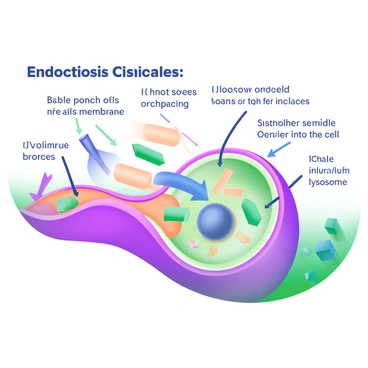
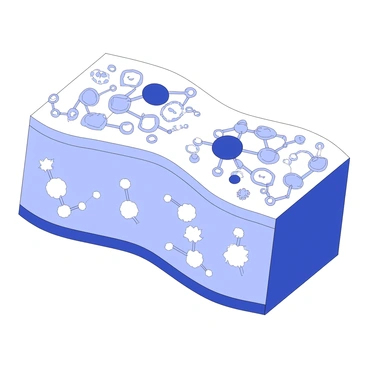
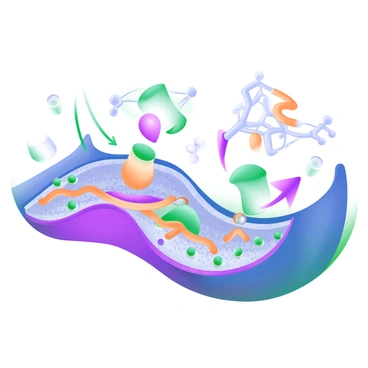
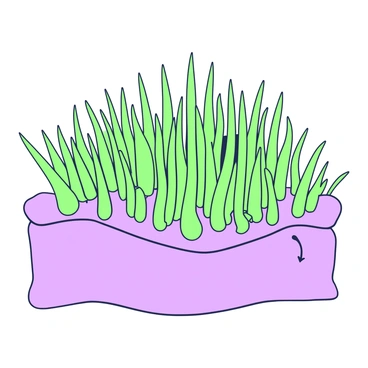
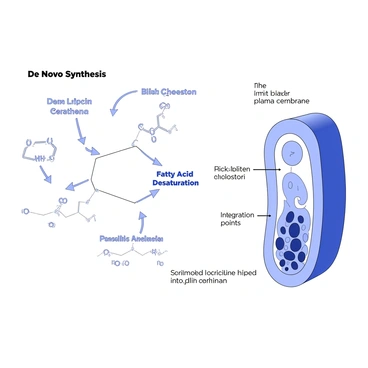
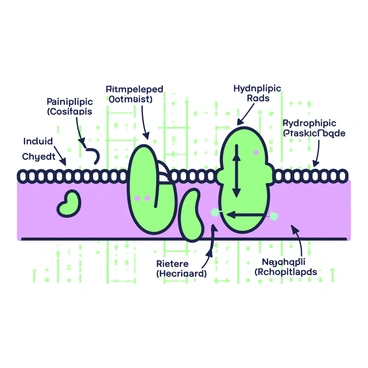
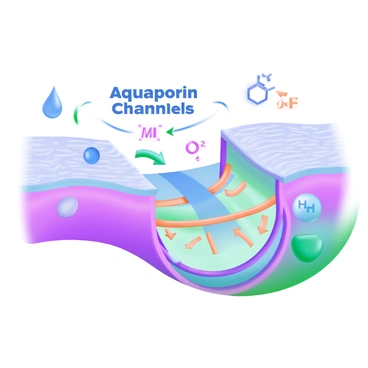
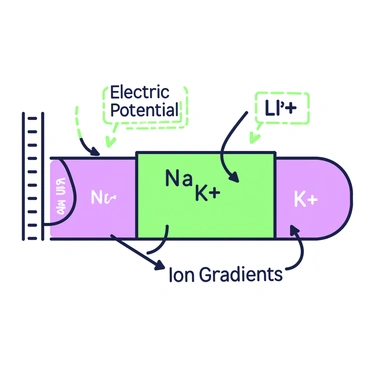
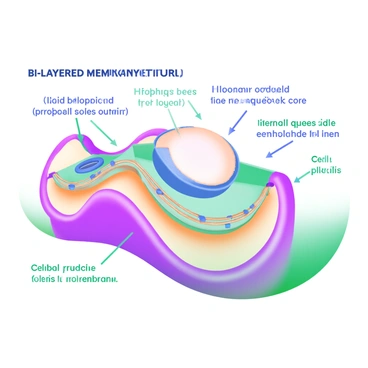
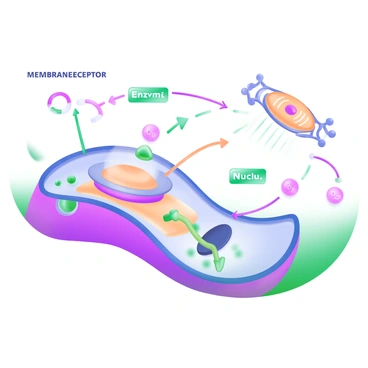
A close-up view of a cell membrane showcasing specialized lipid rafts. These rafts are depicted as distinct circular regions that appear thicker than the surrounding membrane. Each raft is visually emphasized, highlighting their richness in cholesterol. The membrane has a textured surface, with varying shades to indicate the differences in thickness, and the surrounding areas are represented as more fluid and less structured. Each raft has a slightly raised profile, making them stand out clearly from the rest of the membrane.A detailed illustration of a cell's plasma membrane, highlighting the peripheral proteins that are attached to both the inner and outer surfaces. The plasma membrane is shown as a semi-permeable barrier, with a distinct lipid bilayer structure. On the outer surface, peripheral proteins are depicted as globular structures interacting with the extracellular matrix. On the inner surface, additional peripheral proteins can be seen, associated with the cytoskeleton. The overall structure includes various receptor sites on the proteins, illustrating their role in cell signaling and communication.A detailed representation of a plasma membrane viewed from a lateral perspective. The membrane has a semi-transparent appearance, showcasing its phospholipid bilayer structure. Various fluorescent markers are scattered across the surface, each highlighting different components. Small circles represent proteins, glowing in green, blue, and red hues. Additionally, some areas of the membrane feature lipid rafts, indicated by clusters of yellow markers. The overall layout emphasizes the distinct regions and signaling pathways within the membrane structure.A cell surface is depicted with various structures. On this surface, a glycoprotein is prominently featured, characterized by its protein core. Attached to this core are multiple carbohydrate chains that extend outward, creating a bushy appearance. The chains vary in length and branched structure, adding complexity to the overall shape. The cell membrane surrounding the glycoprotein is visible, with a smooth texture that contrasts with the intricate detail of the carbohydrate chains. The image captures the essential characteristics of the glycoprotein, emphasizing its role on the cell surface.A modern pastel illustration depicting the entire process of "endocytosis". The image shows a cell membrane with a small indentation where a vesicle is beginning to form. Surrounding the vesicle, there are arrows indicating the movement of substances being engulfed. A series of steps visually represented include the vesicle pinching off from the membrane, followed by the vesicle traveling into the cell. As the vesicle approaches the interior of the cell, it is shown fusing with an organelle, like a lysosome. Each stage of the process is clearly labeled with concise descriptions, and the cell's surrounding environment is illustrated with various cellular components, creating a comprehensive visual narrative of endocytosis.An illustration showing the separation of membrane components during cell division. The cell is depicted in the process of mitosis, with two distinct halves that each contain a nucleus. Each half features a membrane with various integral proteins and lipid components visible. The cytoplasm is represented, highlighting the division as the cell membrane pinches inward at the center. There are arrays of microtubules, indicating the spindle fibers pulling the chromatids apart towards each pole. Small vesicles are present near the membranes, illustrating the transport of proteins and lipids during this process.A detailed illustration of a cholesterol molecule positioned between two phospholipid molecules in a plasma membrane. The cholesterol is depicted as a distinct, multi-ring structure, showcasing its organic composition. The phospholipids are illustrated with a hydrophilic head and two hydrophobic tails, arranged in a bilayer formation. The background is filled with various smaller molecules and structures to represent the complexity of a cell membrane environment, enhancing the intricate details of cellular architecture.An illustration depicting a plasma membrane with varied thickness throughout its structure. The membrane is segmented to showcase different regions where the thickness changes. Embedded within the membrane are various proteins of different shapes and sizes, some extending through the membrane while others are partially embedded. Lipid molecules are illustrated surrounding the proteins, demonstrating differences in their arrangements and types. Some areas appear denser with proteins, while others are more sparse, creating a visual contrast in thickness. The background is minimal to focus on the membrane's detailed representation.A detailed illustration of a receptor protein located on a membrane surface. The protein has a distinct three-dimensional shape, with various structural components such as alpha-helices and beta-sheets visible. A signal molecule is shown binding to the active site of the receptor, demonstrating a close interaction. The membrane surface is depicted with a smooth texture and includes lipid bilayer elements. Nearby, there are small protein clusters and lipid molecules, emphasizing the cellular context. The overall composition captures the intricate details of molecular interaction at the membrane level.An illustration depicting the movement and flexing of "phospholipids" within a cell membrane. The image features a cross-sectional view of the membrane, with various "phospholipid" molecules represented in different colors to indicate their hydrophilic heads and hydrophobic tails. Some "phospholipids" are shown tilting and shifting, creating a dynamic effect. Small arrows indicate the lateral movement of the "phospholipids," while textured patterns in the background suggest fluidity. Additionally, there are small embedded proteins and carbohydrate chains visible on the surface, enhancing the complexity of the membrane structure.A detailed illustration of a cellular membrane featuring numerous microvilli protruding from its surface. The microvilli are finger-like projections densely packed together, significantly expanding the surface area of the membrane. Each microvillus is slender and elongated, tapering at the tip. The membrane itself is represented as a smooth layer, with the microvilli radiating outward, showing their height and arrangement. The overall composition focuses on the intricate details of the microvilli, emphasizing their role in increasing surface area for absorption.A detailed representation of cell recognition is depicted through the interaction of glycoproteins on the cell surface. The glycoproteins are shown as long, branching structures with a translucent appearance. They are positioned on the surface of a spherical cell, which is colored in a light shade of blue. Surrounding the cell are various other cell surface molecules represented as smaller, differently shaped proteins, each in a range of colors including green, yellow, and red. These molecules are engaging with the glycoproteins, showing points of contact and connection. The background is a soft gradient transitioning from light white to pale blue, enhancing the clarity of the cell and its components.A close-up view of a plasma membrane's lipid bilayer is depicted. The image highlights various phospholipids, each with prominent hydrophilic heads facing outward and hydrophobic tails pointing inward. The lipid bilayer displays a layered structure, with the heads forming a smooth surface and the tails creating an inner core. The phospholipids are arranged in a fluid manner, allowing for slight movement and flexibility. The background features subtle variations in color, enhancing the visual distinction between the heads and tails of the phospholipids.A detailed illustration of lipid synthesis pathways is depicted. In the center, there are two distinct pathways labeled "De Novo Synthesis" and "Fatty Acid Desaturation." Arrows connect various enzymes and metabolites involved in the processes. Surrounding the pathways, there are representations of key lipids being synthesized, such as phospholipids and cholesterol, each labeled clearly. To the side, the plasma membrane is illustrated, showing the arrangement of lipid bilayer with embedded proteins and cholesterol. Integration points are marked, indicating how the synthesized lipids are incorporated into the membrane structure.An illustration of a biological membrane showcasing its asymmetrical distribution of phospholipids and proteins. The membrane is depicted as a bilayer, with two distinct layers of phospholipids where the hydrophilic heads face outward and the hydrophobic tails are oriented inward. Embedded within the bilayer are various proteins, some spanning the entire membrane while others are situated on one side. Labels indicate the different types of phospholipids and proteins, with arrows illustrating their positions. The overall structure is enhanced with a grid-like background to emphasize the membrane's organization.A close-up view of a cellular membrane is depicted, showcasing phospholipids arranged in a bilayer structure. The phospholipids are illustrated with hydrophilic heads facing outward and hydrophobic tails positioned inward. Cholesterol molecules are interspersed throughout the phospholipid bilayer, represented as small, rigid structures that fit snugly between the phospholipids. The cholesterol's presence is highlighted, emphasizing its role by stabilizing the membrane's fluidity and integrity. Arrows indicate the interaction between cholesterol and the fatty acid tails of the phospholipids, illustrating how cholesterol affects membrane stability. A soft gradient background enhances the visibility of the membrane composition and interactions.A modern pastel illustration depicting a plasma membrane with "Aquaporin Channels" labeled in the center. The membrane is shown as a wavy line separating two distinct areas, one with blue water droplets and the other with a textured surface. The aquaporin channels are represented as small, tubelike structures piercing through the membrane, with arrows indicating the flow of water moving from one side to the other. Surrounding the membrane are molecular symbols, such as hydrogen and oxygen, illustrating the composition of water.A diagram illustrating the electrical potential across a membrane due to ion gradients. In the center, there is a horizontal membrane with two regions on either side, labeled with the symbols for sodium (Na⁺) and potassium (K⁺) ions. Arrows indicate the direction of ion movement, with Na⁺ moving towards the membrane and K⁺ moving away. A vertical axis on the left shows the electrical potential, marked with values. Additionally, there are dotted lines illustrating the ion concentration gradients, with one side having a higher concentration of Na⁺ and the other of K⁺. Text boxes contain the terms "Electrical Potential" and "Ion Gradients" in clear, bold lettering.A detailed diagram illustrating a "liposome" with a focus on its "bi-layered membrane structure." The outer layer is composed of phospholipid molecules arranged in a "bilayer," showcasing their hydrophilic heads facing outward and hydrophobic tails facing inward. The diagram includes labeled components such as "lipid bilayer," "internal aqueous core," and "embedded proteins" that represent the organization similar to a "cell membrane." Additionally, arrows indicate the fluidity of the membrane, and color gradients differentiate various components for clarity.An illustration depicting a signal transduction pathway. In the center, there is a detailed representation of a "membrane receptor" with an elongated shape, embedded within a "cell membrane." Lines extend from the receptor, illustrating the pathway of signal transmission. Along these lines, various "protein molecules" and "enzyme icons" are shown, demonstrating the interaction and activation process. Additionally, there are "messenger molecules" represented by small circles traveling toward a "nucleus," which is shown in the background, symbolizing the cell's response to the incoming signal. The colors used are soft pastels, creating a harmonious visual composition.A detailed illustration of cell junctions is at the center of the image. Several cell membranes are depicted, each with a distinct color, showing how they are closely aligned. Anchoring proteins are visible as elongated structures connecting adjacent cell membranes, portrayed in a contrasting color to highlight their role. The cell junctions exhibit a network-like appearance, with numerous proteins extending between the cells. The overall composition emphasizes the interaction between the cell membranes and the anchoring proteins, showcasing the complexity and organization of cellular structures.A detailed illustration of the fluid mosaic model of the plasma membrane is presented. The membrane consists of a bilayer of phospholipids, with each phospholipid having a hydrophilic head and two hydrophobic tails. Scattered throughout the bilayer are various proteins, some spanning across the bilayer, while others are attached to the outer or inner layers. There are glycoproteins with carbohydrate chains protruding from the surface, and cholesterol molecules interspersed within the phospholipid layers, providing stability. Small lipid rafts can be seen, clustering certain proteins together, without disrupting the overall fluidity of the membrane. The colors used in the illustration highlight the different components, making the structure complex yet visually coherent.A modern pastel illustration depicting proteins anchoring the plasma membrane to the cell's cytoskeleton for structural support. The image shows a detailed view of a cell membrane with the words "Structural Support" in bold, blue letters prominently displayed at the center. Surrounding the membrane are stylized proteins represented as colorful shapes with connecting lines, illustrating their anchoring function. At the base of the cell, a simplified representation of the cytoskeleton is visible, with filaments in soft green and yellow hues, creating a supportive structure beneath the membrane.
В сообществе ничего не найдено