Knee replacement

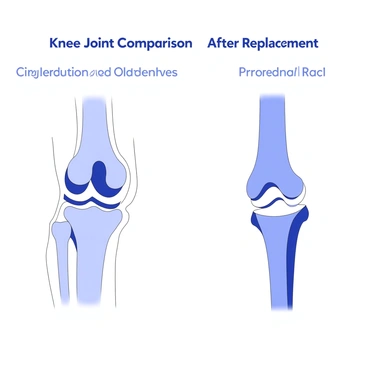
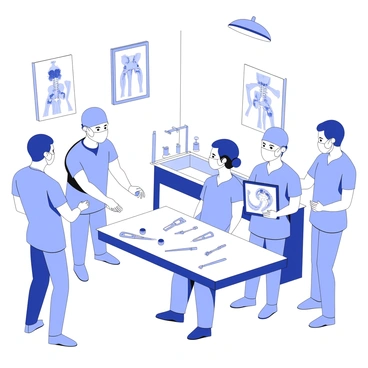
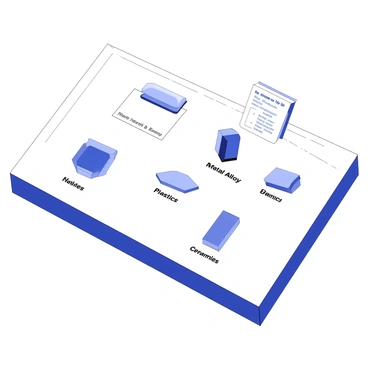
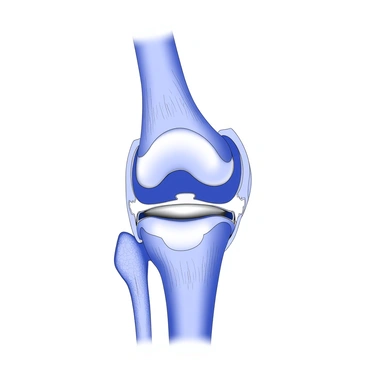
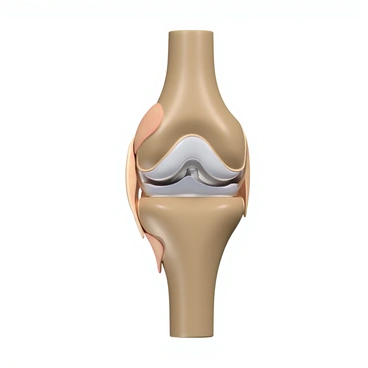
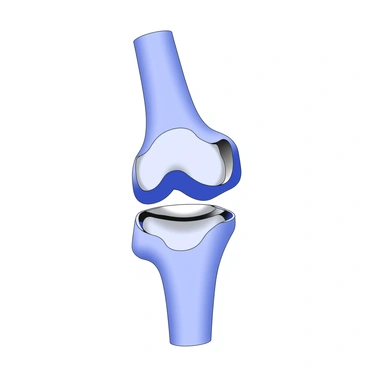
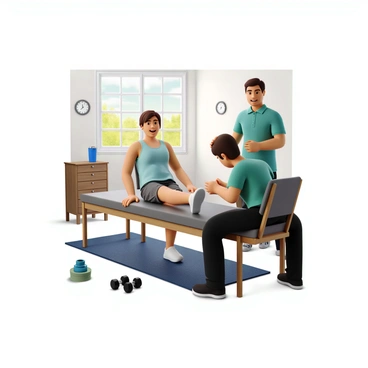
A comparison chart is displayed, featuring two side-by-side illustrations of a knee joint. On the left, the damaged knee joint is depicted with visible degeneration and wear, showing irregular bone surfaces and osteophytes. The joint space appears narrowed, and there are signs of inflammation surrounding the area. On the right, the knee joint after replacement is illustrated, showcasing a smooth, prosthetic joint with defined metallic components. This side has an even joint space and a clean, polished appearance. Above the comparison, there is a title labeled "Knee Joint Comparison."A set of surgical tools is displayed neatly on a sterile tray. Each tool is polished to a high shine, reflecting light. The tray is organized with a scalpel, forceps, and retractors, arranged in a way that highlights their precise design. There are two types of scissors, one larger for incisions and a smaller pair for delicate work. In the center, a knee implant component is positioned prominently, showcasing its contours and structure. A surgical drape in the background emphasizes the clinical setting.A friendly cartoon character that resembles a knee joint, featuring a shiny new metal replacement. The character has a big smile and expressive, animated eyes. It has arms and legs, with the legs designed to mimic the shape of human legs. The knee character stands in a cheerful pose, with one hand raised in a wave. The shiny metal replacement gleams under light, highlighting its newness and quality. The overall color scheme includes soft blues and whites that convey a sense of health and vitality.A team of surgeons is gathered in the scrub room, each wearing surgical scrubs, masks, and gloves. The lead surgeon is discussing the procedure while pointing to a digital tablet displaying knee anatomy. Two other surgeons are preparing instruments, arranging surgical tools neatly on a sterile table. A nurse is standing nearby, ensuring that all supplies are ready for the operation. There is a sink in the background with antiseptic dispensers, and the walls are lined with medical posters detailing surgical techniques. Bright overhead lights illuminate the room, enhancing the clinical atmosphere.An elderly person is using a walker while recovering from knee replacement surgery. The person has gray hair and is wearing a light blue hospital gown. They are slowly moving forward with the assistance of a walker, which is metallic and has a small seat. One hand rests on the walker, while the other hand is holding onto the side of a white hospital bed. In the background, a window with soft light filters through sheer curtains, and a bedside table holds a glass of water and a stack of magazines. A physical therapist is gently supporting the elderly person from the side, encouraging their progress.A person is sitting on a yoga mat in a living room, performing knee rehabilitation exercises. The individual is wearing comfortable athletic clothing and is focused on a stretching exercise. There are exercise bands and a small towel nearby. A coffee table holds a glass of water and a fitness journal. Sunlight streams through a window, illuminating the space. A potted plant adds a touch of greenery to the room.A hospital room featuring a patient lying in a hospital bed, resting after knee replacement surgery. The patient is wearing a light blue hospital gown, with a white bandage visible on the knee. Soft sunlight is streaming through a window, illuminating the room. Nearby, a small table holds a glass of water and a medical chart. An IV stand is next to the bed, and a monitor displaying vital signs is situated at the patient's bedside. The walls are painted in calming pastel colors, creating a restful atmosphere.A doctor is seated at a desk, engaging in a conversation with a patient across from them. The doctor has a clipboard in hand, filled with notes and diagrams illustrating the knee joint. The patient sits attentively, wearing a concerned expression as they listen. The room is equipped with medical posters on the walls, providing information about knee anatomy and surgical procedures. A model of a knee joint sits on the desk between them, visually demonstrating the replacement process. The doctor points towards the model, explaining the benefits and potential risks involved in knee replacement surgery.A journal lies open on a table, displaying handwritten entries. The pages are filled with notes documenting the patient's journey through knee replacement surgery. The first entry describes the day of the surgery, detailing the patient's emotions and the hospital environment, with a green and purple illustration of medical equipment nearby. Subsequent entries reflect on the days following the surgery, noting physical therapy sessions and exercises, with visual elements showing a calendar marking progress. A green and purple depiction of a knee brace rests beside the journal, symbolizing recovery. The final entries highlight milestones, such as the patient walking unaided, with sketches of supportive family members and friends encouraging them along the way.An X-ray image of a knee joint where a replacement implant is visible. The joint is depicted clearly, showing the contours of the femur and tibia surrounding the implant. The implant is situated in the center of the knee joint, with metallic components contrasting against the bone structure. Surrounding tissues are faintly visible, showcasing the alignment of the knee and the positioning of the replacement. The overall image captures the joint from a straight-on perspective, highlighting the surgical intervention.A table showcases various materials used for knee implants. Different samples, including metal alloys, plastics, and ceramics, are neatly arranged in labeled sections. Each material has distinct textures and finishes, with some shiny and reflective, while others have a matte appearance. Small informational cards accompany each sample, detailing the properties and uses of the materials. The table is set in a well-lit environment, allowing for clear visibility of each material's characteristics.A high-tech operating room featuring a sleek robotic arm positioned above a surgical table. The robotic arm is equipped with various surgical instruments, including a scalpel and forceps, ready to assist in a knee replacement surgery. Surrounding the arm are monitors displaying patient data and surgical images, all illuminated by bright, sterile overhead lights. The room is filled with essential surgical equipment, including an anesthesia machine and a sterile instrument tray. The walls are painted in soft pastel colors, enhancing the modern atmosphere of the operating room.A detailed cutaway view of a knee joint is displayed, highlighting the internal anatomy. The joint is shown from a lateral perspective, with a focus on the femur, tibia, and patella. The replacement component is prominently featured within the joint space, showcasing its contours and placement against the surrounding bone structures. Surrounding the replacement, there are anatomical details such as ligaments, cartilage, and synovial fluid. The cutaway reveals the natural curvature of the bones and the fibrous tissues that support the joint. Annotations label key parts of the anatomy, providing clarity to the viewer.An illustration depicting the process of customizing a knee implant for a specific patient. In the center, a large knee implant is displayed, surrounded by a 3D model of a human knee joint. To the left, a doctor is examining a digital screen that shows a patient's knee anatomy, with highlighted areas indicating measurements. To the right, tools are visible, including a ruler, a caliper, and a computer with design software open. Above the knee implant, there are labels detailing various customization features, such as size, shape, and material. The overall arrangement emphasizes the precise and detailed nature of the customization process.A doctor is standing next to a medical chart displaying an illustration of a knee joint. The doctor is wearing a white coat and holding a pointer to indicate parts of the knee. The patient is seated in a chair, looking attentively at the chart. The office has a desk with a laptop, some medical books neatly stacked, and a model of a knee joint on the desk. A window with soft light filters in, illuminating the scene.A young athlete with short, dark hair and a determined expression is performing stretching exercises in a bright, open gym. He is dressed in a fitted black athletic shirt and shorts, showcasing his muscular build. He is seated on a yoga mat, with one leg extended forward and the other bent at the knee. His foot is equipped with a supportive brace, highlighting the recent knee replacement. In the background, there are various fitness equipment and exercise balls, adding to the gym atmosphere.A detailed cross-section of a human knee joint is illustrated, showcasing the anatomy surrounding a knee replacement implant. The joint includes the femur, tibia, and fibula, clearly defined with intricate textures to indicate bone structure. The replacement implant is positioned snugly between the femur and tibia, with its metallic surface reflecting light subtly. Surrounding the implant, there are representations of cartilage, ligaments, and synovial fluid, emphasizing the normal anatomy adjacent to the artificial component. The areas of bone are shaded to indicate depth and structure, while the implant is depicted in a way that demonstrates its fit and integration within the bone.A layered illustration depicting the anatomy of a knee joint. The image shows the femur, tibia, and fibula bones clearly labeled. Surrounding the bones, the ligaments, tendons, and cartilage are illustrated in distinct colors for clarity. There is a transparent view of a knee replacement implant positioned within the joint, showcasing its design and structure. All the components are arranged to highlight the relationships between the anatomical parts and the prosthetic replacement.A person is walking along a path in a park during the morning. The individual is wearing a comfortable athletic outfit, consisting of a light blue shirt and gray shorts. They have a knee brace visible on their right leg, indicating the recent knee replacement. Surrounding them are green trees with a mix of tall and short trunks. Patches of green grass line the walkway, creating a natural border. The sun is rising, casting soft shadows on the ground, while a few birds are perched on branches nearby, adding life to the tranquil setting.A physical therapist is guiding a patient through a rehabilitation session for knee replacement. The therapist, wearing a teal polo shirt and black pants, is demonstrating an exercise while standing next to the patient. The patient, seated on a therapy table, is wearing comfortable athletic clothing and has a focused expression. Nearby, there are rehabilitation tools such as resistance bands, a yoga mat, and a set of weights. The room is well-lit with large windows, allowing natural light to brighten the space. Visual aids, including anatomical diagrams of the knee, are displayed on the walls.A modern pastel illustration featuring a sleek showcase displaying the latest knee replacement implants. The showcase is made of transparent glass with silver accents. Inside, several knee implants of various sizes and designs are neatly arranged on soft, cushioned surfaces. Each implant is labeled with a small tag detailing its specifications. The background includes a gentle gradient of pastel colors, highlighting the showcase and implants. Soft lighting illuminates the implants, creating subtle reflections on the glass surfaces.A perfectly fitted knee joint replacement is displayed in detail, showcasing the intricate components of the prosthetic. The joint is positioned in a way that highlights its alignment with the surrounding tibia and femur. Metal and plastic components are represented clearly, demonstrating the connection points and surface textures. The alignment of the axis of the knee is precise, indicating ideal positioning for optimal functionality. The surrounding anatomy, such as ligaments and cartilage remnants, is also depicted to provide context for the replacement joint.A multi-section timeline illustration depicting the healing process after a knee replacement surgery. The first section shows a surgical bed with medical tools, and a knee brace on a patient's leg. The second section illustrates a patient undergoing physical therapy, with a therapist guiding the patient through exercises. The third section presents a scene of the patient walking with crutches outdoors, surrounded by trees and a pathway. The final section captures the patient engaging in activities like jogging and cycling, showcasing a transition to a more active lifestyle. Each section of the timeline is clearly labeled with milestones of the recovery process.A patient with short brown hair, wearing a light blue tank top and gray athletic shorts, is sitting on a physical therapy mat. The patient is performing gentle exercises for knee replacement recovery, with one leg extended in front and the other bent. A physical therapist, wearing a green polo shirt and black pants, is guiding the patient through the motions. Various exercise equipment, such as resistance bands and small weights, is visible nearby. A wall clock shows the time, indicating the middle of the day, and a window reveals a sunny outdoor view.A sterile surgery room filled with bright fluorescent lights and clean, white walls. In the center of the room, a surgical table holds a patient covered with a blue surgical drape. A team of doctors, dressed in green scrubs and blue surgical masks, is focused on performing a knee replacement surgery. One doctor is holding surgical instruments, while another is carefully monitoring the patient's vital signs on a nearby machine. Various medical equipment, including a tray with surgical tools and a large display showing medical information, is organized neatly around the room.A 3D model of a knee replacement implant is positioned on a sleek, modern stand. The implant features intricate details, showcasing its metallic and plastic components. The background is softly illuminated with gradient pastel colors, enhancing the focus on the implant. The knee replacement model is rotating slowly, providing a clear view of its structure from different angles. The stand is designed with clean lines, supporting the implant securely. Subtle shadows are cast beneath the stand, adding depth to the scene.
В сообществе ничего не найдено