Primary succession

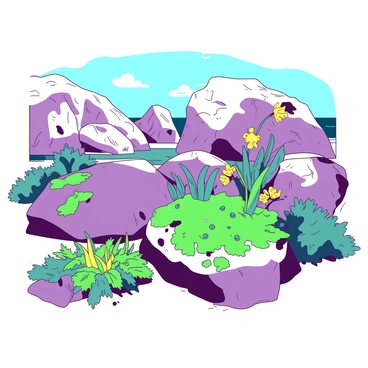
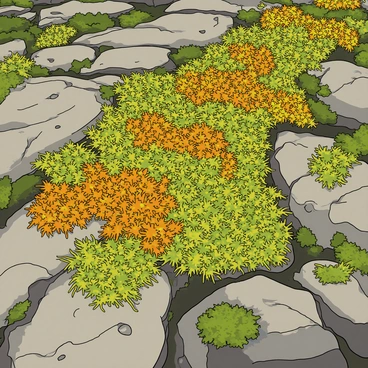
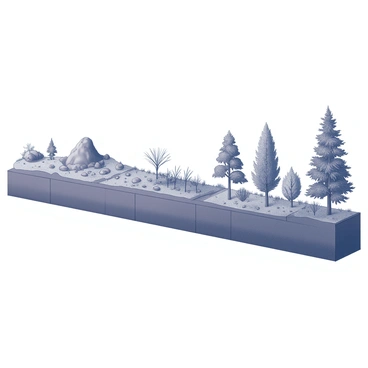
A detailed scene depicting coastal rocks in a vibrant setting. The rocks are rugged and weathered, showcasing various textures and colors. Gradually, they are becoming covered with diverse plant life, including small green ferns and colorful wildflowers. In the foreground, patches of rich green moss are growing, while other areas feature clumps of bright yellow and teal plants that are establishing themselves among the rocky surfaces. The background reveals a continuation of this natural process, with more plants emerging as they adapt to the coastal environment. The sky above is clear and bright, illuminating the scene beautifully.A landscape featuring a sandy dune with a gentle slope, partially covered by tufts of dune grasses. The grasses are rooted deeply, showing their role in stabilizing the sand. The surrounding area has scattered patches of bare sand, indicating the previous shifting nature of the dune. The scene conveys the early stage of primary succession, with the grasses representing the first signs of ecological development on the dune.A rocky terrain covered with an assortment of lichens in vibrant colors. Various types of lichens, including green, yellow, and orange, spread out like a colorful carpet across the uneven surface of the rocks. The rocks are textured and weathered, with some showing patches of moss alongside the lichens. Sunlight casts soft shadows, highlighting the intricate patterns formed by the different lichen species.A view of newly formed land from volcanic activity featuring dark, rugged terrain with patches of cooled lava. The ground displays uneven surfaces and small hills, with plumes of steam rising from cracks. Scattered across the landscape are the first signs of vegetation, including small green shoots and tufts of grass sprouting through the volcanic soil. In the foreground, a few small colorful flowers can be seen pushing through the rough ground, symbolizing the beginning of life in this harsh environment. The sky above is clear with a few wispy clouds, showcasing a bright blue backdrop.A close-up view of lichen growing on a rugged rock surface. The lichen displays intricate, organic patterns with a variety of textures and shapes, showcasing its unique structure. The rock beneath is rough and uneven, adding contrast to the delicate formations of the lichen. Tiny details such as cracks and crevices in the rock are visible, enhancing the overall complexity of the scene. Soft shadows enhance the depth and dimensionality of the lichen's surface, emphasizing its natural beauty.An illustration of a rugged landscape characterized by bare rock surfaces revealing the aftermath of a volcanic eruption. The ground is uneven with jagged edges and sharp contrasts between the exposed rock and the surrounding environment. Small fissures and cracks are visible on the surface, indicating recent geological activity. Scattered patches of ash and debris are present, suggesting the violent nature of the eruption. In the foreground, a few resilient pioneer species can be seen beginning to establish themselves on the rocky ground, indicating the onset of primary succession. The sky above is expansive, possibly featuring clouds that hint at changing weather patterns, enhancing the feel of a dynamic ecosystem in transition.A black-and-white illustration of a developing ecosystem showcasing various pioneer species. In the foreground, clusters of small, hardy plants are emerging from the soil, their roots visibly intertwining with rocky surfaces. A few scattered moss patches cover the ground, providing a base for growth. In the background, young trees with slender trunks and sparse foliage reach upwards, indicating their early stages of development. Several insects, such as ants and beetles, can be seen interacting with the soil and plants, contributing to the ecosystem's growth. A few rocks are placed strategically throughout the scene, providing texture and a sense of ruggedness to the environment.A solidified lava flow forming a rugged landscape, with hardened black rock textured in various patterns. Small patches of soil are visible among the cracks, with green shoots of plant life breaking through the surface. Various types of plants, including ferns and small flowering plants, are emerging from the lava, showcasing resilience. The scene captures the contrast between the dark, rough surfaces of the lava and the delicate, fresh greenery. There are small insects and rocks scattered throughout the landscape, adding to the habitat's details.A detailed timeline illustrated as a series of panels. Each panel depicts a different stage of primary succession over decades. The first panel shows a barren landscape with rocks and bare soil, indicating the initial state after a volcanic eruption. The second panel illustrates pioneer species, such as lichens and mosses, beginning to colonize the area, with small patches of green emerging. The third panel displays grasses and small plants, starting to take root among the rocks and soil, signaling further development. The fourth panel portrays shrubs and small trees beginning to grow, with increased vegetation creating a more complex ecosystem. The final panel represents a mature forest with a variety of trees, undergrowth, and wildlife, showcasing a fully developed ecosystem. Each panel is labeled with the corresponding decade to indicate the progression of time.A close-up view of organic matter, such as fallen leaves, twigs, and small plants, accumulating on the forest floor. The scene shows various layers of decomposing material, with visible texture and detail as they break down. Tiny insects and earthworms can be observed working through the organic material, contributing to the decomposition process. In the foreground, a rich layer of dark brown soil is forming beneath the organic matter, highlighting the early stages of soil development. Light filters through the tree canopy above, illuminating the intricate details of this ecosystem.A bird's nest sits securely on a rocky ledge. The nest is composed of twigs and small branches, intricately woven together. Surrounding the nest are small plants and sprouts, indicating the early stages of plant colonization. The rocky surface is rough and textured, contrasting with the delicate nature of the nest. Small fissures in the rock may contain patches of moss and lichen, accentuating the sense of a natural environment in transition. The scene conveys a sense of life and growth emerging from the rocky terrain.A small rock crevice filled with various tiny green plants and vibrant moss. The rocks surrounding the crevice are rough and weathered, with patches of lichen in shades of yellow and green. The underside of the crevice shows droplets of moisture clinging to the rock surface, glistening in the light. Small, delicate flowers in shades of purple and white peek out from the greenery, while tiny insects can be seen exploring the plants. The scene conveys a sense of vibrant life thriving in this miniature ecosystem.Colorful biotic crusts are covering the ground in various shades of green, purple, and gold, creating a vibrant tapestry of textures. The crusts are formed from a mixture of mosses, lichens, and small plants, with intricate patterns weaving through them. Surrounding the crusts, the soil is a rich brown, dotted with small pebbles and sand. In the background, there are hints of emerging seedlings, indicating the early stages of ecological succession. Sunlight casts gentle shadows across the ground, enhancing the vivid colors of the biotic crusts.A rocky landscape shrouded in thick fog. Large, jagged rocks are scattered throughout the scene, their surfaces uneven and textured. Amidst the rocks, several small green shoots are emerging, their delicate leaves breaking through the mist. The fog creates a soft, muted atmosphere, partially obscuring the view of the rocks and giving a sense of depth.A detailed illustration of the slow process of soil formation. In the foreground, there is a cross-section of soil layers showing dark brown organic matter at the top, gradually transitioning to lighter brown and then to rocky material below. Tiny roots of plants are visible intertwining through the organic layer. Small insects and earthworms are present, indicating decomposition. Above the soil, a few green plants are growing, their roots extending into the soil. The surrounding atmosphere is filled with a gentle breeze, causing small particles and leaves to float in the air. The scene captures the gradual transformation of rock and organic matter into fertile soil.A barren land initially depicted as a dry, cracked soil surface. Gradually, small green sprouts begin to emerge from the earth, providing a stark contrast to the barren ground. As the scene progresses, small trees with slender trunks and delicate leaves grow taller, scattered across the landscape. Some of the young trees are clustered together while others stand alone, signifying the slow journey towards a lush forest. The overall composition reflects a sense of growth and renewal.A blue glacier is visibly receding, showing its cracked and rugged surface, revealing an area of white earth underneath. In the foreground, vibrant green plant life is sprouting from the exposed land, showcasing a mix of small bushes and delicate flowers. The contrast between the remaining icy blue of the glacier and the fresh green of the new plants emphasizes the transformation of the landscape. Some small rocks are scattered among the plants, adding texture to the scene. The sky above the glacier is a bright blue, enhancing the vividness of the new growth below.A rocky landscape features prominent erosion patterns on various rock surfaces. These rocks display grooves and ridges, indicating the effects of weathering over time. In the foreground, small patches of soil accumulate in the crevices, serving as the base for new plant life. Tiny green sprouting seedlings peek through the rocky terrain, signaling the initial stages of primary succession. Surrounding the rocks, there are scattered pebbles and small stones, enhancing the natural environment. The sky above is expansive, with a few soft clouds drifting gently.A newly formed volcanic island with rugged, uneven terrain rising from the ocean waves. Jagged black rocks are scattered across the island's surface, with steam rising from small fissures. Scattered green plants are emerging from the cracks in the rocks, showing the first signs of life. The plants vary in size, with some being small tufts while others are slightly taller, contrasting against the dark volcanic backdrop. The ocean surrounds the island, with gentle waves lapping at the rocky shore.A variety of small insects and animals scattered throughout patches of green vegetation. Several ladybugs with bright red shells and black spots are crawling on vibrant green leaves. A tiny butterfly with colorful wings flits above a patch of blooming flowers. A small brown rabbit sits quietly among the grass, its ears perked up. Ants trail along the ground, navigating through the undergrowth. A colorful caterpillar is inching its way along a stem. The scene is filled with the lush, fresh look of new plant growth, with varying shades of green in the background.A bird is perched on a branch, its beak open as it drops seeds onto the ground below. The landscape is barren, featuring cracked earth and sparse vegetation. In the distance, small green sprouts of pioneer species begin to emerge from the soil, indicating new growth. The scene captures the bird in action, with seeds falling through the air toward the dry ground, contributing to the ecosystem.A barren landscape with dry, cracked earth stretches across the image. In the foreground, several plants are depicted, each uniquely shaped due to constant wind exposure. One plant has a twisted, spiral form, while another is bent at an angle, resembling a flag. The leaves of the plants appear rugged and tattered, showcasing their struggle against the wind. The background features a clear blue sky, enhancing the starkness of the environment.A cluster of small, hardy pioneer plants, primarily mosses, emerging between the cracks of rugged gray rocks. The mosses display a vibrant green color, contrasting with the rough texture of the stones. The rocks are unevenly shaped, with varying shades of gray and some patches of lichen. Sunlight gently illuminates the scene, casting soft shadows that highlight the details of the moss and the crevices in the rocks.A close-up view of textured rocky surface covered with various colorful lichens. The lichens display a range of colors including bright greens, yellows, and purples, creating a vibrant contrast against the grayish rock. The intricate patterns and shapes of the lichens illustrate their unique characteristics. Sunlight highlights the moisture on the rock, enhancing the brightness of the lichens and emphasizing their role as the first colonizers in a natural landscape.A rocky landscape is depicted, showcasing a variety of stones and boulders that have been worn smooth by the elements. The foreground features water droplets cascading down the surfaces of the rocks, indicating recent rainfall. In the background, patches of frost cling to the crevices of the rocks, shimmering softly. Small green plants are starting to emerge in the cracks between the rocks, demonstrating the early stages of primary succession. The environment appears dynamic, with the interplay of moisture and frost enhancing the textures of the stones.A detailed diagram illustrating the stages of primary succession from bare rock to a mature forest. The first stage depicts bare rock with no vegetation, followed by the emergence of lichens and mosses gradually colonizing the surface. The next stage shows small herbaceous plants taking root, creating soil as they die and decompose. As time progresses, small shrubs and grasses appear, further enriching the soil. Eventually, young trees begin to grow, leading to the establishment of a young forest. The diagram should clearly label each stage of succession, using arrows to indicate the progression from one stage to the next.An illustration depicting a gradual transition from bare, gray rock at the left side to rich, dark brown soil on the right. The rock surface is uneven and rugged, with some small cracks visible. As the image progresses, patches of green moss and small weeds begin to appear, indicating the start of plant life. The soil is dark and crumbly, dotted with small pebbles and scattered roots. Towards the right, colorful flowers in vibrant shades of yellow and red, along with small plants, are growing lushly. The scene captures the vibrant contrast between the stark rock and the thriving plant life, showcasing the beauty of nature's progression.An illustration of a barren landscape with light brown soil and scattered rocks. In the foreground, several small green seeds are being carried through the air by gentle gusts of wind. The seeds are depicted as small, round shapes with delicate wings. In the background, there are hints of distant brown hills under a clear blue sky. The movement of the seeds is accentuated by swirling lines, demonstrating the direction of the wind.A rocky outcrop with uneven surfaces and sharp edges is partially hidden beneath a lush green blanket of moss. The moss has a vibrant, deep green color, creating a soft contrast against the rough, gray tones of the rocks. Small patches of sunlight filter through nearby trees, illuminating the moss and highlighting its texture. The scene is tranquil, with the moss appearing thick and inviting, wrapping around the contours of the stones.A landscape featuring large moss-covered rocks scattered throughout the scene. The rocks vary in size and shape, some protruding prominently from the ground, while others are partially hidden by patches of moss. Surrounding the rocks, there are tufts of grass and small plants interspersed among them. Above, a cloudy sky fills most of the background, with varying shades of gray creating a sense of depth and texture. The clouds are dense and layered, casting soft shadows across the landscape.
В сообществе ничего не найдено