Frog dissection

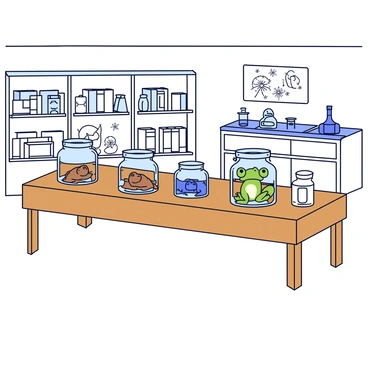
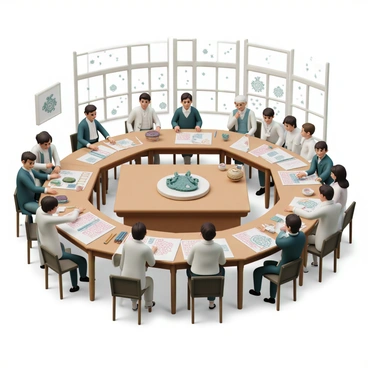
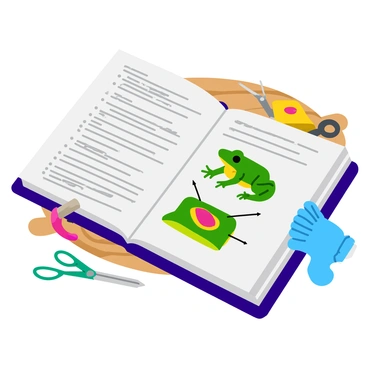
A close-up view through a microscope showcasing a frog's tissue sample. The tissue is vibrant green, with intricate cellular structures clearly visible. The cells display various shapes and sizes, with distinct nuclei and cytoplasm. Some cells are elongated while others are more rounded, creating a diverse texture across the sample. The microscope lens reveals fine details such as cell membranes and organelles, illuminated for clarity. The background is blurred, emphasizing the focus on the frog's tissue.A green frog sitting on a large leaf in a vibrant rainforest setting. The frog features detailed cutaway views that reveal its internal organs, including the heart, lungs, and digestive system. Surrounding the frog are various leafy plants, colorful flowers, and a background of tall trees and vines, creating a rich and lush environment. The scene is filled with small insects and droplets of water glistening on the leaves, adding to the tropical atmosphere.A biology lab with a long wooden table in the center. On the table, there are various glass jars containing animal specimens. One jar contains a vibrant green frog, while another holds a small brown frog. Each jar is labeled with a tag for identification. The background features shelves filled with books and scientific equipment, such as microscopes and beakers. The walls are decorated with educational posters about animal anatomy and biology.A green frog sitting on a lily pad surrounded by a pond filled with green water. The frog has transparent sections revealing its internal organs, including a heart, lungs, and intestines. Water lilies with white flowers float nearby, and reeds and tall grass frame the scene. The sunlight filters through the leaves of overhanging trees, creating dappled light on the water's surface. Small insects flit above the water, adding life to the natural habitat.An interactive museum exhibit is set up to showcase different stages of frog development and anatomy. The centerpiece features a large, clear viewing case displaying a series of specimens. On the left, there are eggs clustered together, showing the early stage of development. Next to the eggs, there are tadpoles swimming in water, clearly displaying their elongated bodies and tails. Further along, there are small froglets emerging from the water, with developing legs and still a hint of tail. On the right side, adult frogs are perched on rocks and lily pads, showcasing vibrant patterns and textures on their skin. Informational panels are placed around the exhibit, detailing the life cycle stages and anatomical features of frogs, including their lungs and unique skeletal structure. Visitors can interact with touch screens to learn more about each stage of development.A green frog sitting on a round lily pad in a calm pond. The lily pad is vibrant in color, with a glossy surface that reflects light. The frog has its legs tucked underneath and is facing forward. A subtle overlay of its anatomical structure is visible, illustrating the internal organs and skeletal system in a semi-transparent style. The water around the lily pad is clear, with gentle ripples extending outward.A tablet screen is positioned horizontally, vividly showcasing a virtual frog dissection app in progress. The display features a detailed, black-and-white illustration of a frog, with labeled anatomical parts such as the heart, lungs, and digestive system clearly visible. Surrounding the tablet are various dissecting tools like scissors and forceps, arranged neatly on a table surface. A pair of gloved hands is seen interacting with the tablet, tapping on different sections of the frog for further information. The background is minimal to focus attention on the tablet and its content.A scientist wearing a white lab coat is standing at a laboratory bench, focused on analyzing frog samples. The scientist has short black hair and safety goggles resting on their forehead. Bright overhead lights illuminate the workspace, casting a clear glow over the various scientific instruments. The bench is cluttered with petri dishes containing vibrant green frog specimens, and a microscope is positioned prominently in the center. The background features shelves filled with neatly arranged glass containers and equipment, all contributing to the busy atmosphere of the laboratory.A science classroom lab table is set up for frog dissection. The table is centrally located, with a clean white dissection tray placed in the middle. On the tray, there is a preserved frog specimen positioned on its back, showcasing its distinct legs and body structure. Surrounding the tray, a variety of dissection tools are arranged neatly, including a scalpel, scissors, forceps, and a ruler. Nearby, a set of gloves lies ready for use, and a notebook is opened, displaying notes and diagrams related to the dissection. Above the table, a wall-mounted bulletin board features educational posters about frog anatomy and biology.A historical timeline illustration featuring various frog species from different eras. The timeline includes images of ancient amphibians, modern frogs, and illustrations of their anatomical structures. Each frog is labeled with its scientific name and the date of its discovery or classification. The background consists of a textured parchment design to give a sense of age. Alongside the frogs, there are diagrams highlighting key anatomical features, such as the skeletal structure and skin layers, placed in clear panels for clarity. "Evolution of Frog Species" is prominently displayed at the top of the illustration.A friendly green frog with large, expressive eyes and a wide smile is sitting on a lily pad. The frog has its front limbs raised, showcasing its "webbed feet". Its body is plump, with smooth skin adorned with small spots. To the side, there are labels pointing to various parts: "eyes", "mouth", "front legs", "back legs", and "tail". The background features a clear blue sky and a few fluffy clouds, with a gentle ripple in the water surrounding the lily pad.A room with wooden tables arranged in a circle, each table covered with dissecting tools and anatomical diagrams. In the center, there is a large wooden table with an open dissection kit, showcasing a preserved frog. The classroom has large windows letting in natural light, illuminating the dust motes floating in the air. Students in period clothing, such as long coats and high-collared shirts, are gathered around the tables, some holding scalpels and others taking notes in leather-bound notebooks. On the walls, there are framed illustrations of frog anatomy and charts depicting various stages of dissection. The atmosphere is focused and serious, with a sense of curiosity and discovery surrounding the students as they engage in their studies.A cartoon-style illustration of a frog with various parts labeled for educational purposes. The frog has a bright green body with smooth skin and large, bulging eyes. Its limbs are extended, showcasing webbed feet and strong back legs. The labels include "eyes," "skin," "front limb," "hind limb," "webbed foot," and "mouth." The labels are clearly displayed in bold text, pointing to each respective part of the frog. The background is simple and white to emphasize the frog and its labeled features.A 3D icon of a frog anatomy model showcasing the skeletal structure and organs. The frog is depicted in vibrant green colors, with transparent elements revealing its internal organs. Surrounding the frog are abstract art elements, including swirling shapes and geometric patterns in bright colors, creating a dynamic composition. The frog is positioned centrally, with the abstract elements radiating outward, enhancing its anatomical features.A poster featuring a clear and detailed step-by-step process of frog dissection. Each step is illustrated with distinct images that show the frog in various stages, from the first incision to the examination of internal organs. The frog is depicted in a realistic position, with labels pointing to different parts, such as "skin," "muscles," and "organs." Each section is accompanied by concise descriptions in bold lettering, providing educational information. The background is simple to ensure the frog and the steps remain the central focus of the illustration.An educational chart featuring a detailed illustration of a frog's anatomy. The frog is depicted in a side view, showcasing its various parts. Each anatomical feature, such as "eyes," "tympanum," "forelimbs," "hind limbs," "webbed feet," "dorsal skin," and "ventral skin," is clearly labeled with arrows pointing to each specific part. The chart has a clean, organized layout with a bright background to enhance visibility and readability.A modern pastel illustration featuring a detailed representation of frog anatomy, with different systems highlighted in vibrant colors. The frog is positioned centrally, showcasing its external features. Labels in clear, bold font identify the skeletal system, muscular system, circulatory system, and digestive system. Each system is illustrated with corresponding colors: the skeletal system in light blue, the muscular system in soft orange, the circulatory system in gentle green, and the digestive system in pale yellow. Surrounding the frog are small, whimsical icons representing various anatomical parts, such as bones, muscles, and organs, contributing to an informative yet visually engaging composition.A close-up view of a frog's skin displayed under a large round magnifying glass. The skin features various textures and patterns, showcasing small bumps and ridges. The colors range from vibrant green to earthy brown, with some areas reflecting light. Tiny droplets of water can be seen on the skin, adding detail to the scene. The background is softly blurred to emphasize the magnified skin of the frog.An array of dissection tools including a scalpel, forceps, and scissors, neatly arranged on a stainless steel tray. The tray sits beside a green frog that is positioned on a dissecting board. The frog has smooth skin and bulging eyes, positioned facing upwards with its legs slightly splayed. The scene is well-lit, emphasizing the shiny surfaces of the tools and the natural color of the frog.An animated frog character is in front of a digital screen displaying its anatomy. The frog has big, round eyes and a wide smile, with its green skin accentuated by purple spots. It stands on its hind legs, using its front legs to point at different parts of its body. On the screen, there are labeled sections detailing the frog's heart, lungs, and limbs in a clear and colorful diagram. The background is simple, ensuring the focus remains on the frog and the digital anatomy display.A page from a scientific journal is displayed prominently. At the top, there is the title "Frog Dissection Study" in bold text. Below the title, a detailed illustration of a dissected frog occupies the center. The frog is shown with its internal organs labeled, including the heart, lungs, and digestive system. Each organ is depicted clearly, with lines connecting the labels to the respective parts. Surrounding the illustration, there are sections of text that describe the dissection process, methodologies, and findings, formatted in clear columns. In the bottom corner, a small diagram shows the anatomy of the frog alongside a scale bar for reference. The entire page is filled with structured scientific content, presenting the information in a professional manner.A biology classroom filled with students actively engaged in taking notes. The students are sitting at desks, each equipped with notebooks and pens. The teacher stands at the front, pointing to a large poster of a frog anatomy diagram on the wall. On a central table, there is a dissected frog, showing its internal organs. Some students are leaning closer to observe the dissection, while others are focused on writing. The room is bright with colorful educational posters and models of various animals lining the walls.A cartoon frog with bright green skin wearing large round glasses is standing on its hind legs. The frog is pointing with one webbed finger to a blackboard that displays a colorful diagram of its anatomy. The diagram includes labeled parts such as "heart," "lungs," and "legs," drawn in a playful style. The background features a classroom setting with a few colorful books stacked on a desk and a window showing a sunny day outside.A side-by-side comparison of a green frog and its tadpole stage. The frog on the left is illustrated with smooth, vibrant skin, large bulging eyes, and long hind legs. Detailed anatomical features such as its webbed feet and a distinct, wide mouth are highlighted. The tadpole on the right is depicted as a small, rounded shape with a long, thin tail and a smooth, dark body. The tadpole has tiny eyes positioned near the top of its head, with detailed gills visible on the sides. The background shows a simple aquatic environment with a few lilies and bubbles to indicate the tadpole's habitat.A colorful jigsaw puzzle of a frog's anatomy, featuring detailed illustrations of organs and systems, is spread across a wooden table. Several children are engaged in putting the puzzle together. One child, a girl with curly brown hair, is holding a green puzzle piece, concentrating on its placement. Another child, a boy with short blonde hair, is smiling while connecting two pieces. A third child, a girl with straight black hair, is kneeling beside the table, pointing excitedly at a section of the puzzle. The background shows a bright, inviting classroom filled with educational posters about animals and nature.A group of students gathered around a dissecting table with focused expressions. They are wearing safety goggles and lab coats. On the table, there is a frog laid out for dissection, surrounded by various dissection tools. The frog is displayed with its skin opened, showing internal organs clearly. The students are leaning in, some taking notes while others point at the frog, demonstrating curiosity and engagement. The background includes classroom posters related to biology and a whiteboard with diagrams of the frog's anatomy.A student’s guidebook with a sturdy cover is open to a detailed page about "frog dissection procedures." The page features clear, labeled diagrams of a frog, including its anatomy, with arrows pointing to different parts such as the heart, lungs, and intestines. In the background, there are notes and bullet points outlining the steps of the dissection process in neat handwriting. The text is printed in a readable font, with important terms highlighted in bold. The guidebook is resting on a wooden table, and there are a few dissecting tools like scissors and tweezers placed nearby, along with a pair of safety gloves.
В сообществе ничего не найдено