Andreas vesalius human

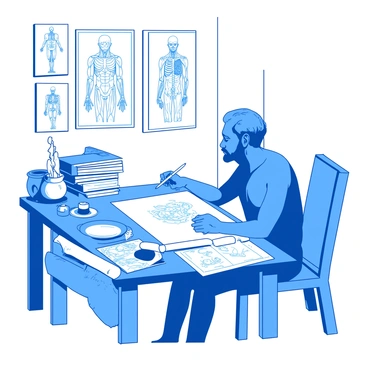
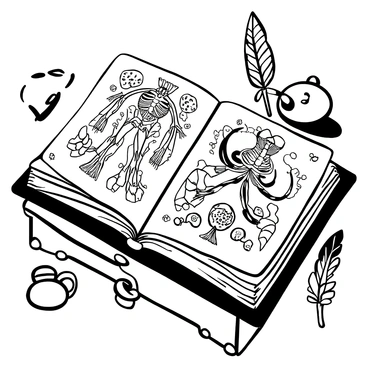
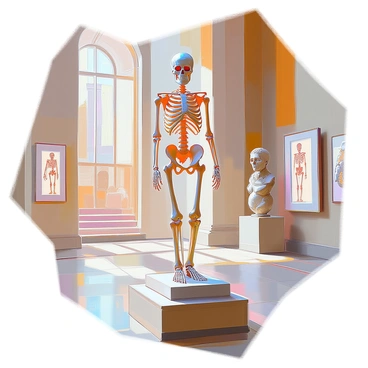
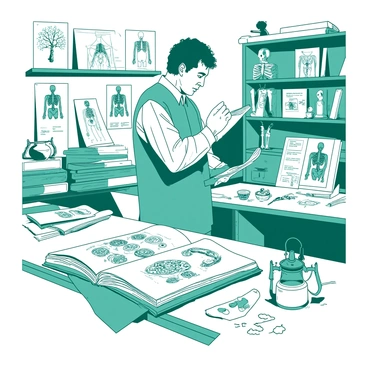
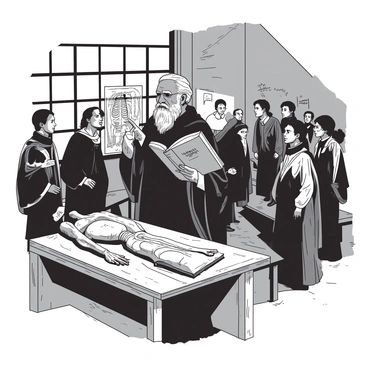
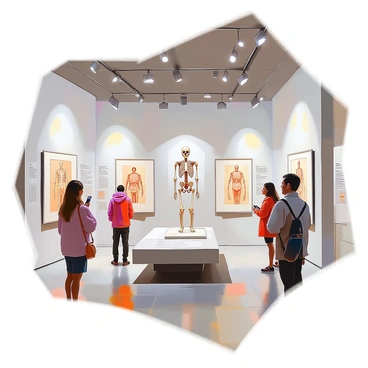
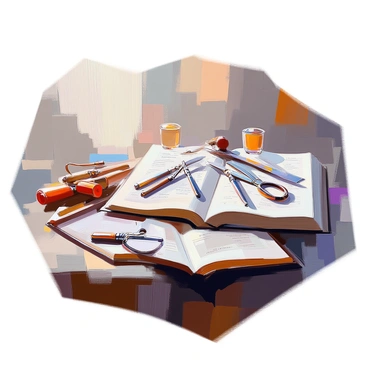
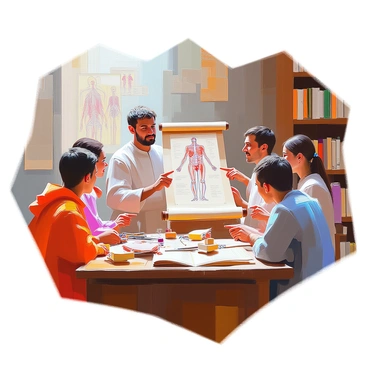
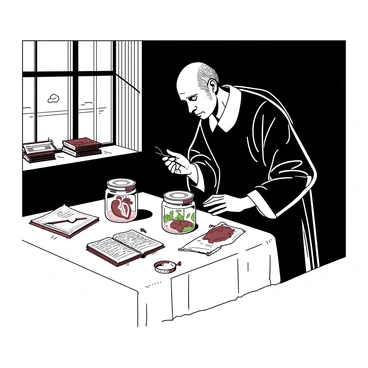
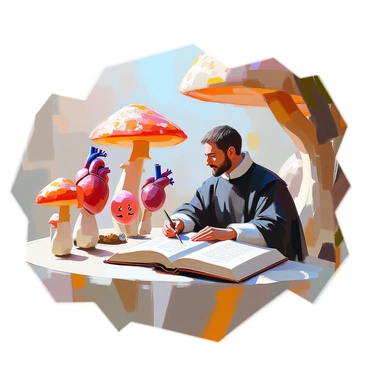
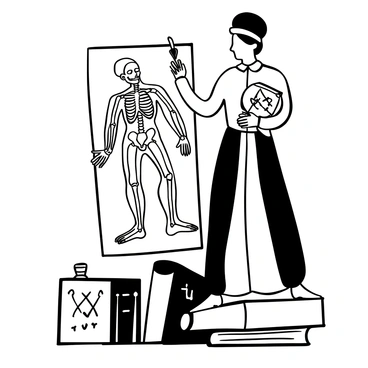
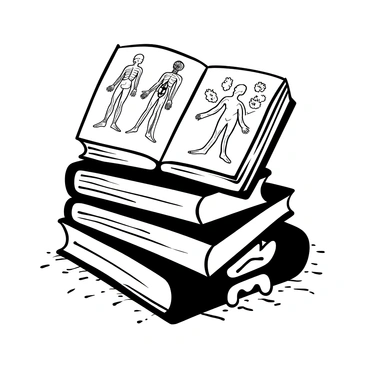
A surreal landscape featuring rolling hills that resemble the contours of human muscles and tendons. In the foreground, a river flows through a valley shaped like the curve of a spine. Towering trees have trunks that mimic the form of ribs, while clouds above take on shapes reminiscent of lungs. The sky is painted in soft pastel colors, creating a dreamlike atmosphere. In the distance, mountains stand tall like the silhouette of a skull, creating an unusual yet captivating scene.A teal garden filled with plants and flowers that are uniquely shaped like human organs and bones. In the center, a large red heart-shaped flower stands tall, surrounded by smaller pink lung-shaped plants. On one side, there are vibrant yellow leaves shaped like ribs arching gracefully. Delicate orange petals resemble the flowing lines of veins, while a cluster of white flowers take the form of kidneys. The overall scene presents a surreal yet captivating blend of nature and anatomy.A blue figure of Andreas Vesalius is seated at a wooden desk, intently sketching the human muscular system on a large sheet of parchment. His right hand holds a quill, poised above the detailed drawing, while his left hand rests on a reference book open beside him. The desk is cluttered with various anatomical drawings, ink pots, and parchment rolls. In the background, a white wall displays framed illustrations of the human body, adding to the scholarly atmosphere of the room.An open antique book lying on an ornate wooden table. The pages are yellowed with age, showcasing intricate black-and-white illustrations of detailed human anatomy. Various anatomical structures, such as muscles, bones, and organs, are illustrated with precision across the pages. The book is surrounded by a few vintage quills and an inkpot, adding to the scholarly atmosphere.A man, identified as Vesalius, is seated at a wooden table covered with various sketches and anatomical diagrams. He has a focused expression as he studies a large, open book filled with detailed illustrations. To his left, there is a collection of plants and flowers arranged in small vases, their forms influencing his work. On the table, there are quills and inkpots alongside pieces of parchment covered in his sketches of human anatomy. In the background, the light filters through a window, casting soft shadows that enhance the details of his intricate drawings.A life-size anatomy chart is prominently displayed on the wall of a Renaissance doctor's office. The chart illustrates the human body in detailed sections, showcasing muscles, organs, and skeletal structures in a rich color palette. Surrounding the chart, the office features dark wooden shelves filled with glass bottles containing various herbs and tinctures, reflecting the medicinal practices of the era. A large, ornate wooden desk is positioned in front of the chart, cluttered with parchment, quills, and ink pots. Soft, warm light filters through a window, illuminating the intricate details on the chart and the rustic furnishings of the room.A skeleton is positioned prominently on display in a grand hall. The hall has high ceilings and elegant architecture, with large arched windows letting in soft light. The walls are adorned with intricate illustrations of anatomical art by Vesalius, showcasing detailed human anatomy in framed displays. The skeleton itself is a complete human skeleton, meticulously arranged and highlighted under a soft glow. Ornate decorations and classical sculptures can be seen in the background, contributing to the scholarly atmosphere of the space.A teal Vesalius is standing in the center of his busy workshop, surrounded by various anatomical drawings and detailed models of human anatomy. The workshop is filled with wooden tables, cluttered with parchment scrolls and charcoal sketches. Each drawing depicts different parts of the human body, showcasing intricate details of muscles and organs. In the background, models of skeletons and body parts are displayed on shelves, emphasizing the theme of anatomy. Vesalius is examining a large open book, filled with illustrations, while a small oil lamp casts soft light over the scene.A Renaissance medical lecture hall filled with scholars engaged in discussion. The hall features high ceilings supported by wooden beams, and large arched windows allow light to filter in. In the center, a long wooden table displays open books and parchment notes. Several scholars, dressed in period-appropriate robes, are gathered around the table, some writing, while others are gesturing animatedly as they share ideas. On the walls, anatomical drawings are hung, showing various human organs. A lecture podium stands at the front, where a professor gestures towards a large scroll. Test tubes and early medical instruments are placed on side tables. There are stacks of books scattered around the room, contributing to the scholarly atmosphere.A blue-clad Vesalius stands in a dimly lit study, deeply focused on a red anatomical heart model placed on a wooden table in front of him. He has curly hair and is wearing a white ruffled collar, looking contemplative as he gazes at the heart. Around him, various anatomical sketches and open books lie scattered across the table. A quill and inkpot sit beside the books, ready for him to jot down his thoughts. The soft glow of a candle illuminates the scene, casting gentle shadows around him.A puzzle consisting of various pieces shaped like different parts of the human body, inspired by Vesalius' work. The pieces include a heart, lungs, a brain, and limbs, each intricately designed to reflect anatomical details. The puzzle is set on a wooden tabletop with a few scattered pieces around it. A reference book about Vesalius is partially opened beside the puzzle, displaying illustrations of human anatomy. The background features a softly lit room with a neutral-colored wall.A detailed illustration of the human circulatory system, prominently displaying the heart at the center. The heart is depicted in a vibrant red hue, with arteries and veins branching out in various directions. Major arteries such as the aorta, pulmonary artery, and coronary arteries are labeled clearly. Visible veins include the superior and inferior vena cava, and the jugular veins, also labeled for clarity. The surrounding structures, such as the lungs and major organs, are subtly integrated into the background, providing context to the circulatory system. Each component of the system is distinct and carefully organized for educational purposes, with clear lines and labels connecting to each part.Andreas Vesalius is focused on examining a human skeleton positioned on a wooden table in a dimly lit library. He is dressed in a period-appropriate outfit, featuring a dark cloak and a ruffled collar. The library is filled with tall shelves lined with numerous aged books and scrolls, creating a scholarly atmosphere. A flickering candle casts soft shadows, illuminating the details of the skeleton and Vesalius's concentrated expression. Beside the skeleton, an open anatomy book lies on the table, displaying detailed illustrations and annotations. An inkwell and quill rest nearby, suggesting that he is taking notes on his observations.In a duotone illustration, an elderly man with a long beard, wearing a dark robe, is standing at the center of an anatomy theatre. He is pointing at a large open anatomy book in his left hand while using his right hand to gesture towards a dissected human body laid out on a wooden table. Surrounding him are several young apprentices, all dressed in similar dark robes, attentively observing the demonstration. The theatre is circular, with wooden benches filled with more students, all focused on the lesson. The atmosphere is filled with an air of curiosity and concentration as the sun casts light through a high window, illuminating the scene.A modern museum exhibit showcasing "Vesalius' anatomy illustrations" displayed prominently on sleek white walls. Each illustration is framed in simple black frames, allowing the intricate details of the anatomical drawings to be the focal point. The exhibit is well-lit, with spotlights highlighting the illustrations, casting soft shadows. Informational placards are placed beside each illustration, providing context and details about Vesalius’ contributions to anatomy. The floor is polished concrete, and visitors can be seen observing the illustrations with keen interest, some taking notes or photographs. A large central display table holds a replica skeleton, inviting further exploration of the human anatomy.A collection of historical tools used for anatomical dissections is displayed on a dark wooden table. The arrangement includes a variety of instruments such as scalpels with ornate handles, forceps with intricate designs, and bone saws with polished metal blades. Each tool is carefully laid out, showcasing the craftsmanship and detail of their construction. A leather-bound anatomy book rests open beside the tools, featuring illustrations of human anatomy. The setting is dimly lit to highlight the gleaming surfaces of the instruments, adding an air of historical significance to the scene.A cluttered desk is filled with various items related to anatomy studies. In the center, there are "Vesalius' handwritten notes" filled with intricate calligraphy. Scattered around the notes are several "anatomy sketches" depicting different parts of the human body. An old quill pen rests next to an ink pot. Several books with worn covers are piled on one side, while a magnifying glass lies on top of one of the sketches. In the background, a small globe and a candle stand on the desk, contributing to the scholarly atmosphere.Andreas Vesalius, a man of Mediterranean descent with dark hair and a scholarly demeanor, is depicted in a well-lit room filled with anatomical illustrations. He is standing beside a wooden table cluttered with various anatomical models and instruments. Vesalius is engaged with a group of curious patients, a diverse mix of ages and appearances, who are attentively listening to him. He holds a large, detailed scroll that displays intricate illustrations of human anatomy, gesturing towards it with enthusiasm. The patients are leaning in, some pointing at the scroll, while others have expressions of intrigue and awe. The setting includes shelves lined with books and anatomical charts, adding to the scholarly atmosphere of the scene.A white table is set up in a dimly lit room where "Andreas Vesalius" stands, intently examining preserved organs in glass jars. The jars, filled with various organs, are arranged neatly on the table. The glass jars have a slight condensation on their surfaces, showcasing the contents within. Vesalius is dressed in 16th-century attire, wearing a dark robe and a white collar. He is holding a pair of tweezers in one hand, while leaning closer to one of the jars, where a preserved heart is clearly visible. There are also several books and scrolls scattered around the table, adding to the scholarly atmosphere.A duotone illustration featuring a series of anatomical figures inspired by Vesalius. Each figure displays different anatomical poses, showcasing intricate layers of muscles, bones, and organs. The figures are arranged side by side, with some in various stages of movement, while others are standing still, highlighting their anatomical structure. The background is neutral to enhance the details of the figures. Each figure is carefully detailed, emphasizing the complexity and accuracy of human anatomy in a scientific context.A teal figure representing Vesalius is sitting at a wooden table, surrounded by scattered parchment and ink bottles. He is carefully drawing anatomical sketches, focusing intently on the details. Beside him, a white printmaker is using a large, intricate printing press, the press adorned with various anatomical illustrations. The printmaker is gently applying ink to a new sheet of paper, preparing to create a fresh copy of Vesalius's work. Sunlight streams through a window, illuminating the scene and highlighting the dedication of both men to their craft.A scene depicting "Andreas Vesalius," a historical figure with light skin and short, dark hair, is illustrated in a fantastical environment. He is dressed in a period-appropriate outfit, featuring a dark scholarly robe, and is intently studying an open anatomical book laid before him. Surrounding him are various "anthropomorphic organs," each possessing distinct facial expressions and limbs, engaging with one another. A smiling heart floats nearby, while a liver and lungs stand conversing, illustrating a lively interaction. The background reveals an imaginative landscape filled with oversized mushrooms and twisting trees, enhancing the fantastical atmosphere of the setting.An illustration depicting a human figure gradually transforming into a skeletal anatomy. The left side of the image shows a fully formed human with realistic details, such as skin texture and clothing, while the right side reveals the skeletal structure, highlighting the bones and joints. The transition in the middle showcases the gradual fading of flesh and the emergence of bones, emphasizing the contrast between the two forms. The background is neutral to focus attention on the transformation.A portrait of "Andreas Vesalius" standing upright, holding a "quill" in one hand and an "anatomical chart" in the other. He is dressed in scholarly attire, with a robe and a cap. The "anatomical chart" displays detailed illustrations of human anatomy, showcasing bones and muscles. The background features books and scrolls, emphasizing his work in anatomy and medicine.A historical anatomy lecture is unfolding in a dimly lit room illuminated by flickering candlelight. At the front, a wooden table displays several anatomical charts depicting the human body, showcasing muscles, organs, and systems. Nearby, meticulously crafted anatomical models made of wax and wood are arranged to aid in the demonstration. Attendees, dressed in period-appropriate clothing, sit on wooden benches, attentively observing the lecturer, who stands beside the table, gesturing towards the charts with a pointer. Shadows dance on the walls, creating an atmospheric backdrop to this educational gathering.A white laboratory table is filled with various anatomy diagrams and open books showcasing human anatomy. In the center of the table, Andreas Vesalius, dressed in a dark robe, is intently examining a teal test subject. The test subject is lying on a dissection table, with its body partially covered by a teal cloth. Vesalius is holding a scalpel in one hand and pointing to a diagram with the other hand, indicating a particular muscle group. Around him, there are jars filled with preserved specimens and additional diagrams pinned to the walls. The lighting in the room highlights the intricate details of both the subject and the diagrams.A group of scholars gathered around a wooden table, engaged in a lively discussion. In the center, a newly dissected specimen is displayed, with intricate details visible on the surface. Vesalius, holding a quill in one hand, gestures animatedly as he explains his findings. Other scholars, each with books and papers scattered around, lean in closely, examining the specimen. Light falls softly on the table, highlighting the textures of the specimen and the concentrated expressions of the scholars as they delve into anatomical details.An early modern anatomy class featuring a group of students gathered around a wooden table. On the table, there is an open anatomy book displaying intricate illustrations of the human body. Behind them, a brick wall displays several diagrams, meticulously pinned up, showcasing various anatomical structures such as muscles, bones, and organs. The students are attentively observing the diagrams, engaged in discussion, with notes and quills scattered across the table. A large globe sits in one corner of the room, adding to the scholarly atmosphere.A stack of early medical textbooks displaying "anatomical drawings" with fine details across the pages. The books are worn, showing signs of age with frayed edges and faded spines. Each open page reveals "intricate illustrations" of human anatomy, featuring various body systems, labeled with "Latin terms." The books are arranged haphazardly, with one book slightly tilted, revealing more of the illustrations inside. Shadows cast by the stack create a textured surface underneath.A historical anatomy class is taking place in an old classroom with wooden furniture and large windows allowing natural light to enter. Several students are gathered around a large wooden table, observing a dissection of a human body. 

A distinguished man, Andreas Vesalius, is at the center of attention, wearing a dark robe and a white shirt. He is pointing to various parts of the body as he explains the anatomy to his captivated audience. The students, a mix of young men and women, are dressed in period-appropriate clothing and are closely focused on the dissection, some taking notes, while others lean in to get a better view. 

On the table, there are various anatomical tools and a large open book, illustrating the human body. The walls of the classroom are adorned with anatomical drawings and charts, enhancing the learning environment.
В сообществе ничего не найдено